Under-Canopy Lighting Flower Room: 2026 Yield & ROI Guide
Explore an Under-Canopy Lighting Flower Room setup with 2026 yield, PPFD, placement, HVAC, and ROI guidance for commercial growers.
TL;DR
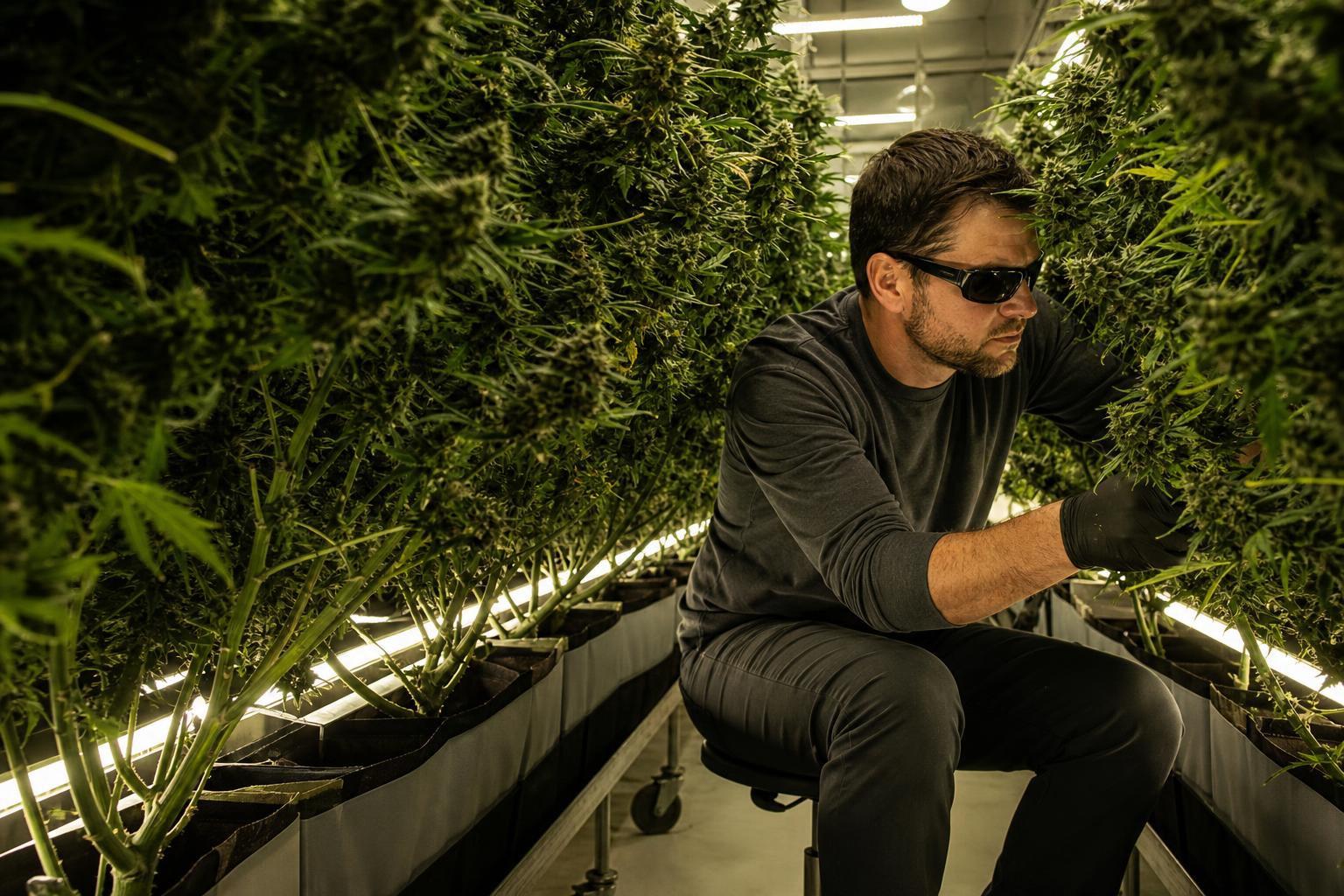
An under-canopy lighting flower room setup places supplemental LED bars beneath the plant canopy, pointing upward, to reach bud sites that overhead fixtures can't penetrate. Peer-reviewed research shows yield increases of 20 to 30%, higher THC and terpene concentrations, and dramatically more consistent product. It's no longer experimental. It's standard practice for commercial cannabis operations serious about maximizing output per square foot.
Under-canopy lighting flower room technology uses a supplemental LED lighting method that positions fixtures beneath the cannabis plant canopy to illuminate lower and middle bud sites that receive limited light from overhead fixtures. By improving light distribution throughout the plant, under-canopy lighting can increase lower bud development, improve canopy level light uniformity, and potentially increase total flower yield. Its effectiveness depends on fixture output, spectrum, placement, cultivar, environmental conditions, and the amount of supplemental light delivered.
Explore under-canopy lighting solutions built for commercial flower rooms.
What Is Under-Canopy Lighting in a Flower Room?
A dedicated under-canopy lighting flower room positions supplemental LED bars beneath the plant canopy, aimed upward to deliver photons to lower and middle bud sites. These fixtures address a straightforward physics problem: overhead lights, no matter how powerful, cannot push enough usable light through dense flowering canopy to reach the bottom third of the plant.
A flower room running 1,000 µmol/m²/s PPFD at the canopy crown might deliver only 100 to 200 µmol/m²/s at mid-canopy height and nearly zero at the base. That means 30 to 40% of potential bud sites are functionally starved for light. Under-canopy bars close that gap without adding more power overhead. This is the core principle behind every under-canopy lighting flower room design.
The distinction matters: these bars are additive, not a replacement. They typically run at 120 to 360 watts compared to 600 to 1,000 watts for overhead fixtures. The goal is better photon distribution, not more total photons.
Why the Flower Room Is Where This Matters Most
Vegetative cannabis canopies are relatively open. Light penetrates reasonably well. But once a plant enters the 12-hour flowering photoperiod, everything changes.
Canopy density increases rapidly during the stretch phase (weeks one through three of flower). Leaves multiply and overlap. Fan leaves act like solar panels for the top of the plant and shade barriers for everything below. The combination of a shorter photoperiod and a thicker canopy creates a severe light distribution problem that simply doesn't exist during veg.
Flower rooms also demand higher PPFD, typically 700 to 1,500 µmol/m²/s depending on CO₂ supplementation, to hit daily light integral (DLI) targets of 35 to 50 mol/m²/day within those 12 lit hours. At these intensities, the contrast between canopy top and canopy bottom light levels becomes extreme. The top is saturated while the bottom is starved.
This is the "next watt" principle that practitioners on LinkedIn and cannabis forums frequently discuss: once your overhead canopy is receiving adequate light, the highest return investment isn't more power on top. It's redistributing photons to the underlit tissue below, where every added µmol produces a proportional yield response because those sites are nowhere near light saturation. Every well-planned under-canopy lighting flower room addresses this redistribution problem directly.
For a deeper look at overhead flower room design, the cannabis flower room lighting guide covers PPFD, DLI, and layout planning in detail.
Under-Canopy vs. Overhead Lighting in a Flower Room
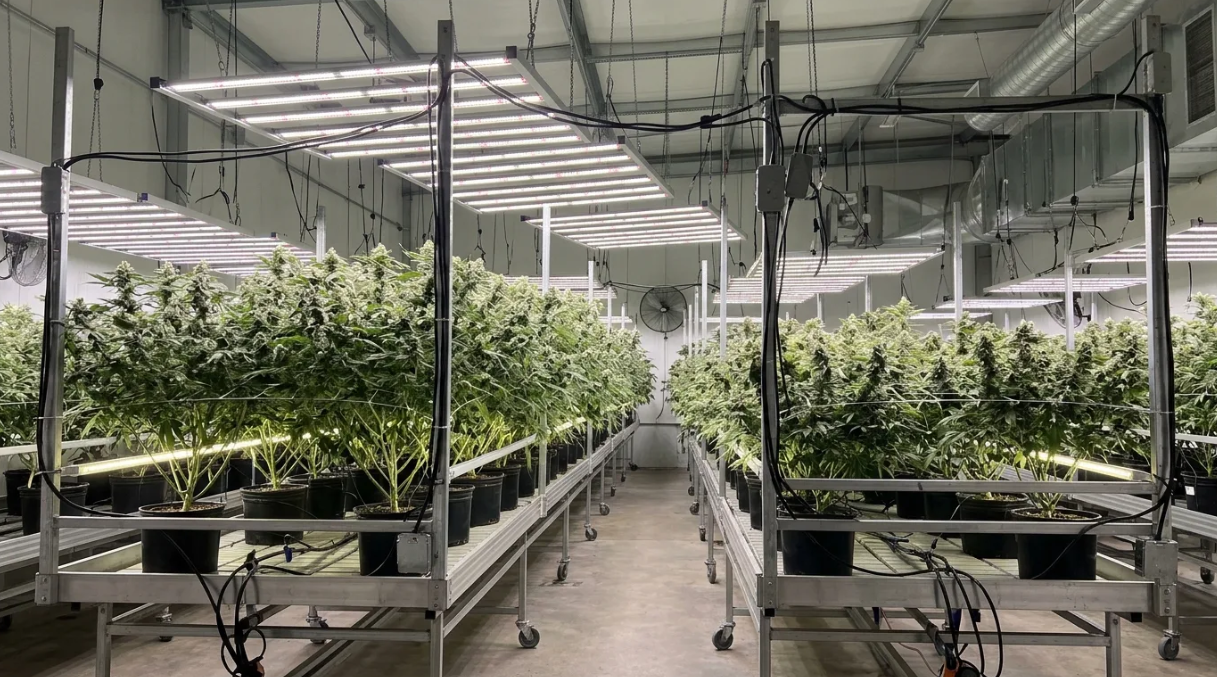
In any under-canopy lighting flower room, overhead and supplemental fixtures serve different purposes. Overhead fixtures provide the primary light source for the upper canopy, while under-canopy fixtures supplement illumination in shaded lower and middle portions of the plant.
| Comparison Factor | Overhead Lighting | Under-Canopy Lighting |
|---|---|---|
| Fixture position | Above the plant canopy | Beneath the canopy |
| Lighting direction | Downward | Upward |
| Primary purpose | Illuminate upper canopy | Supplement lower bud sites |
| Main coverage | Top and upper middle foliage | Lower and middle canopy |
| Typical application | Primary flower room lighting | Supplemental flower room lighting |
| Installation | Ceiling or overhead mounting | Beneath benches, tables, or plant rows |
| Main limitation | Light interception by upper leaves | Limited coverage if fixtures are poorly positioned |
| Best use | Establishing primary canopy light levels | Improving light distribution throughout dense canopies |
Can under-canopy lighting replace overhead fixtures?
No. Under-canopy lighting is designed to supplement overhead fixtures rather than replace them. Overhead lights remain the primary source of photosynthetic lighting, while lower fixtures help deliver additional photons to plant areas that receive less light from above.
What the Research Shows
The evidence supporting under-canopy lighting flower room strategies has moved well past anecdotal. Two peer-reviewed studies anchor the case.
Under-Canopy Lighting Research: Key Findings
Published research supports the use of supplemental lighting to improve light distribution and flower production in medicinal cannabis. However, results vary depending on the lighting configuration and experimental conditions.
| Research | Lighting Comparison | Main Findings |
|---|---|---|
| Garrido et al. (2025) | Overhead only vs. sub-canopy and inter-canopy supplementation | Inter-canopy lighting increased dry inflorescence yield by 29.95%, THC accumulation by 24.4%, and total terpene concentration by 12.5% compared with overhead only lighting. |
| Garrido et al. (2025) | Supplemental lighting and product consistency | Sub-canopy and inter-canopy treatments reduced variability in several yield and chemical measurements, with reductions exceeding 50% for some cannabinoid and terpene yield variability measures. |
| Holweg et al. (2024) | Different LED spectral compositions and PPFD levels | A white light treatment with dual red peaks at 640 and 660 nm increased inflorescence weight compared with a single 660 nm red peak treatment under the tested conditions. |
What do these findings mean for commercial growers?
The research suggests that supplemental lighting can improve the distribution of photosynthetic light throughout a cannabis plant and potentially increase total flower production. However, the strongest results from the 2025 study came from inter-canopy lighting, not exclusively from fixtures installed beneath the plants.
Growers should therefore evaluate under-canopy and inter-canopy configurations separately rather than assuming that all supplemental lighting systems deliver identical results.
Garrido et al., 2025 (Plants Journal)
This is the most rigorous published trial to date. Researchers compared overhead only lighting against both sub-canopy lighting (SCL) and inter-canopy lighting (ICL) configurations. The inter-canopy treatment produced the strongest absolute results: a 29.95% increase in dry inflorescence yield, 24.4% higher THC accumulation, and 12.5% more total terpene concentration.
But the finding that may matter most for medical and pharmaceutical grade producers was about consistency. Both supplemental lighting configurations reduced variability in THC and terpene yields by over 50%. For operations that need batch to batch standardization, that reduction in coefficient of variation is worth as much as the yield bump itself.
Hawley, 2018: University of Guelph Under-Canopy Lighting Research
A 2018 University of Guelph thesis by Dave Hawley investigated how supplemental under-canopy lighting affected cannabis flower production and secondary metabolites.
The experiment compared plants receiving no supplemental under-canopy lighting with plants receiving either red and blue LED lighting or full spectrum LED lighting beneath the canopy.
The results summarized in Thrive Agritech's research whitepaper reported:
- 19.8% higher dry bud mass with red and blue under-canopy lighting compared with the control.
- 24.5% higher dry bud mass with full spectrum under-canopy lighting compared with the control.
The experiment also reported improvements in the bud to non-bud tissue ratio and changes in selected cannabinoid and terpene measurements.
These findings provide early experimental support for supplemental under-canopy lighting. However, they should be interpreted within the context of the original experimental setup, which used a controlled flower room, specific fixture configurations, and approximately 95 µmol/m²/s of supplemental light beneath the canopy.
The findings should not be treated as guaranteed commercial yield increases across different cultivars, room designs, or cultivation environments.
Source: Dave Hawley, 2018, University of Guelph thesis, summarized in Thrive Agritech's research whitepaper.
Key Terms Clarified
Growers, vendors, and researchers use several overlapping terms. A LinkedIn post by a cultivation consultant that ranks on page one for this topic uses "undercanopy, intracanopy, intercanopy" almost interchangeably. They're not the same thing.
| Term | What It Means | Where Fixtures Go |
|---|---|---|
| Under-canopy / sub-canopy (UCL/SCL) | Bars positioned beneath the canopy, pointing upward | Below the lowest significant foliage, 8 to 12 inches above the substrate |
| Inter-canopy (ICL) | Fixtures placed at mid-canopy height, projecting horizontally between rows or plants | Middle of plant height, between rows |
| Intra-canopy | Umbrella term for any lighting placed within or among the plant canopy | Any non-overhead position |
The 2025 Garrido study compared these directly. ICL produced higher absolute yield gains, but most North American growers using standard setups (four-foot-wide tables with rows of plants) tend to see more practical benefit from sub-canopy lighting. One analysis found sub-canopy lighting led to an average yield increase of 7.1% more than inter-canopy across multiple cultivars in typical table configurations, while also being simpler to install and maintain.
For a detailed comparison of how side-mounted fixtures stack up against under-canopy bars, see the side lighting vs. under-canopy lighting breakdown.
Grow Light Types for Under-Canopy and Inter-Canopy Lighting
Not every LED fixture works well beneath or within a canopy. The physical constraints of the space (limited clearance, high humidity, proximity to irrigation) narrow the field considerably.
LED Bars vs. Panel Fixtures
LED bar-style fixtures dominate under-canopy applications for good reason. Their slim profile fits between pots and stems without blocking airflow or obstructing access for pruning and maintenance. Panel-style fixtures, while common overhead, create shadow zones and airflow obstructions when mounted below the canopy. Practitioners on Reddit's cannabis growing communities regularly report that panels mounted under canopy cause localized humidity pockets, which can accelerate botrytis development in dense flower rooms.
What About HPS or CMH Below the Canopy?
It doesn't work. High pressure sodium and ceramic metal halide fixtures produce too much radiant heat for placement near lower foliage. The minimum safe distance from plant tissue would place these fixtures so far from the target bud sites that they'd deliver negligible PPFD where it's needed. LEDs are the only practical technology for supplemental under-canopy applications because they produce far less heat per photon delivered.
Fixture Characteristics That Matter Below the Canopy
When selecting a grow light specifically for under-canopy or inter-canopy use, focus on:
- Slim form factor: The fixture should fit between plant rows without reducing walkway access or crowding stems.
- Appropriate IP rating: Fixtures near the substrate face splashing from irrigation and higher ambient humidity than overhead positions.
- Directional optics: Under-canopy bars should project light upward with controlled beam angles, not scatter photons into walkways or the substrate surface.
- Low surface temperature: Even efficient LEDs produce some heat. Fixtures mounted 8 to 12 inches from plant tissue need to stay cool enough to avoid localized thermal stress.
The Boost XE was designed around these constraints: 120W in a slim bar form factor with full-spectrum white output and compatibility with centralized power architecture for larger deployments.
Light-Induced Stress and How to Prevent It
Adding photons from below is not risk-free. Lower canopy tissue has adapted to shade conditions, and suddenly flooding it with high-intensity light can trigger physiological stress responses that hurt rather than help flower production.
How Light Stress Manifests in Under-Canopy Applications
Plants acclimate their leaf structure and photosynthetic machinery to match their local light environment. Lower leaves develop thinner cell layers, higher chlorophyll density per unit area, and lower capacity for processing high photon flux. When under-canopy fixtures deliver too much light too quickly, several problems can emerge:
- Photobleaching: Lower leaves lose pigmentation, turning pale yellow or white at the points closest to the fixture.
- Leaf curling and cupping: Leaves curl upward or inward to reduce their light-intercepting surface area.
- Accelerated senescence: Excessive light can trigger premature leaf drop in lower canopy zones, which is counterproductive because those leaves feed nearby developing buds.
For a complete guide to distinguishing light stress from nutrient problems, the cannabis light burn vs. deficiency article covers the diagnostic details.
Avoiding Light Stress
The key is gradual introduction. Start under-canopy fixtures at a reduced output (50 to 60% if using dimmable bars) and increase intensity over 5 to 7 days. This gives lower canopy tissue time to upregulate photoprotective pigments and thicken its palisade mesophyll layer.
Timing matters too. As noted earlier, most growers activate under-canopy lighting around day 14 to 21 of flower. But the intensity ramp should be separate from the activation date. Turning fixtures on at full power on day 21 can shock tissue that has spent three weeks adapting to deep shade.
Localized Heat Stress from Under-Canopy Fixtures
Light-induced stress and heat stress are related but distinct problems. Even efficient LED bars convert some electricity into heat, and that thermal output concentrates in the confined space between pots and lower foliage.
Where Heat Accumulates
Overhead fixtures dissipate heat into open room air where HVAC systems can capture it efficiently. Under-canopy fixtures sit in a dead zone: air movement beneath dense canopies is already poor, and adding a heat source compounds the problem.
The most common symptom is leaf tip burn or dry, crispy lower leaves directly above the fixture. This gets misdiagnosed as nutrient burn or root zone issues, but the pattern (damage concentrated directly above the light bar and absent elsewhere at the same canopy height) gives it away.
Mitigation Strategies
- Maintain clearance. Keep fixtures at least 8 inches from the nearest foliage. Closer mounting increases PPFD but also increases tissue temperature.
- Ensure under-canopy airflow. Small oscillating fans or directed ducting beneath tables keeps air moving through the fixture zone. Stagnant air turns a manageable heat load into a damaging one.
- Choose fixtures with passive heat dissipation. Aluminum heat sink bars spread thermal energy across a larger surface area, reducing peak temperatures at any one point.
- Monitor leaf surface temperature. An infrared thermometer pointed at lower leaves near the fixture should read within 2 to 3°F of ambient room temperature. If it's significantly higher, the fixture is too close or airflow is insufficient.
HVAC and Dehumidification Load
Every watt of lighting eventually becomes heat. Under-canopy fixtures add to total room heat load, and the location of that heat matters as much as the quantity.
Quantifying the Added Thermal Load
A room running 20 under-canopy bars at 120W each adds 2,400 watts of heat. For HVAC sizing, that translates to roughly 8,200 BTU/hr of additional cooling demand (using the standard 3.412 BTU per watt conversion). That's meaningful, about equivalent to adding a small residential air conditioner's worth of cooling requirement.
But the issue isn't just total BTUs. Heat from under-canopy fixtures enters the room at canopy base height, where it mixes with transpiration moisture from the substrate and lower foliage. This creates a localized zone of elevated temperature and humidity that overhead HVAC systems may not address effectively.
For a deeper look at HVAC sizing for LED installations, see how much HVAC to cool LED lights.
Dehumidification Implications
Higher leaf temperatures increase transpiration rates. Under-canopy lighting can push lower leaves to transpire 10 to 20% more than they would in unlit shade conditions. In a dense flower room during weeks 4 through 7 (peak flower development), that added moisture enters the lowest, most poorly ventilated zone of the canopy, exactly where botrytis and powdery mildew risk is already highest.
Growers adding under-canopy lighting should:
- Recalculate dehumidification capacity to account for increased transpiration from lower canopy tissue.
- Monitor VPD at multiple canopy heights, not just at the top sensor. A room that reads 1.2 kPa VPD at the canopy crown might be running 0.7 kPa at the base, which is an invitation for fungal problems.
- Consider under-bench airflow ducting to move humid air from the fixture zone into the main room airstream where dehumidifiers can capture it.
Humidity management is covered in more detail in the humidity control in cannabis facilities guide.
Practical Parameters: PPFD, Placement, and Timing
Under-Canopy PPFD and DLI: What Growers Should Measure
Under-canopy lighting should be evaluated using PPFD measurements taken at actual lower and middle canopy positions. Fixture wattage alone does not indicate how much usable light reaches the target plant tissue.
Two measurements are particularly important:
- PPFD (Photosynthetic Photon Flux Density): Measures photosynthetic photon intensity at a specific location, expressed in µmol/m²/s.
- DLI (Daily Light Integral): Measures the total amount of photosynthetically active photons received over a full day, expressed in mol/m²/day.
How to Calculate DLI
Use the following formula:
DLI = PPFD × Photoperiod in Seconds ÷ 1,000,000
For a 12-hour photoperiod:
| PPFD | DLI |
|---|---|
| 700 µmol/m²/s | 30.24 mol/m²/day |
| 800 µmol/m²/s | 34.56 mol/m²/day |
| 1,000 µmol/m²/s | 43.20 mol/m²/day |
| 1,200 µmol/m²/s | 51.84 mol/m²/day |
| 1,500 µmol/m²/s | 64.80 mol/m²/day |
These calculations assume constant PPFD throughout the 12-hour lighting period.
Measuring Supplemental Light Correctly
When evaluating under-canopy fixtures, distinguish between the contribution of supplemental lights and total PPFD received by the plant.
Measure the existing overhead lighting first, then measure the combined light environment after supplemental fixtures are activated.
This distinction is important because lower bud sites may receive photons from multiple directions. Measuring only the output of the under-canopy fixture can underestimate total light exposure.
Use a quantum sensor to measure light at consistent positions and heights, and repeat measurements as canopy density changes throughout flowering. For a complete breakdown of intensity targets across growth stages, see the cannabis PPFD targets guide.
Placement
Position under-canopy bars 8 to 12 inches above the substrate or pot rim, oriented upward. The bars should sit below the lowest significant foliage, not buried within the canopy. Burying them creates hot spots and blocks airflow.
More detail on positioning best practices is available in the light placement guide.
When to Turn On
Most growers introduce under-canopy lighting around day 14 to 21 of flower, when the canopy has thickened enough to block meaningful light from reaching lower bud sites. Turning them on too early wastes energy. Turning them on too late means lower sites have already stalled.
What to Look for When Choosing Under-Canopy LED Fixtures
Selecting an under-canopy LED fixture requires evaluating more than its wattage or advertised brightness. Commercial growers building out an under-canopy lighting flower room should consider the fixture's photon output, energy efficiency, physical design, and compatibility with their space.
Use this checklist when comparing under-canopy lighting systems:
| Selection Factor | What to Evaluate |
|---|---|
| PPF output | Total photosynthetic photon output, measured in µmol/s |
| PPFD distribution | How evenly the fixture delivers light across the target area |
| Photon efficacy | Photosynthetic photon efficacy, measured in µmol/J |
| Spectrum | Spectral power distribution across relevant wavelengths |
| Power consumption | Actual electrical input in watts |
| Dimming | Whether output can be adjusted to match canopy conditions |
| Physical dimensions | Compatibility with benches, tables, and plant spacing |
| Environmental protection | Appropriate ingress protection and suitability for humid cultivation environments |
| Electrical compatibility | Driver, connector, voltage, and control system compatibility |
| Warranty and service | Manufacturer warranty, replacement parts, and technical support |
Why PPF and Photon Efficacy Matter
PPF measures the total amount of photosynthetic photons emitted by a fixture per second. PPFD measures the number of photosynthetic photons reaching a specific surface area per second.
Photon efficacy measures how efficiently a fixture converts electrical power into photosynthetic photon output.
These specifications help growers compare lighting products more accurately than wattage alone.
For commercial flower rooms, evaluate fixtures using independent performance data where available, rather than relying exclusively on manufacturer marketing claims.
How to Install Under-Canopy Lighting in a Commercial Flower Room
Properly outfitting an under-canopy lighting flower room requires more than mounting LED bars beneath plants. Fixture spacing, mounting clearance, electrical capacity, environmental conditions, and light distribution all affect performance.
1. Evaluate Existing Canopy Light Levels
Before installing supplemental fixtures, measure PPFD at several heights throughout the plant canopy.
Take measurements at:
- Upper canopy level
- Middle canopy level
- Lower bud sites
- Areas between plant rows
Use a quantum sensor to identify where light intensity drops most significantly. This baseline helps determine whether supplemental lighting is necessary and where additional fixtures will provide the greatest benefit.
2. Plan Fixture Placement
Position fixtures so that light reaches shaded plant areas without creating excessive localized intensity.
Consider:
- Clearance between fixtures and plant containers
- Distance from the lowest significant foliage
- Fixture orientation and beam distribution
- Table dimensions and plant spacing
- Access for pruning, irrigation, and maintenance
The appropriate mounting height depends on the fixture's optical design and the room configuration. Follow the manufacturer's installation specifications rather than relying on one universal mounting distance. The under-canopy installation checklist walks through each step in detail.
3. Check Electrical Capacity
Calculate the total connected load before installing supplemental fixtures.
For example, a system containing 20 fixtures rated at 120 watts each adds:
20 × 120 W = 2,400 W, or 2.4 kW.
Also evaluate circuit capacity, power distribution, drivers, connectors, and control compatibility. Larger installations should be reviewed by a qualified electrical professional. Facilities running large numbers of under-canopy bars alongside overhead fixtures may benefit from centralized power architecture like OptiDrive, which removes individual drivers from the grow space and simplifies the wiring layout.
4. Monitor Temperature and Airflow
Under-canopy fixtures introduce additional electrical load and can affect the environment beneath the plant canopy.
Check for:
- Localized heat accumulation
- Restricted airflow around lower foliage
- Changes in humidity
- Condensation near electrical connections
- Obstructed access to irrigation equipment
Use appropriately rated fixtures and electrical components designed for the environmental conditions of the flower room.
5. Measure Performance After Installation
Repeat PPFD measurements after installation to determine whether light distribution has improved.
Compare measurements taken at equivalent plant positions and heights before and after installation. Track total energy consumption, harvestable flower yield, and product consistency to determine whether the additional lighting is producing a measurable benefit.
The goal is not simply to increase total wattage. It is to improve light distribution while maintaining acceptable energy efficiency and environmental control.
Secondary Lighting: Installation and Ongoing Maintenance
Once under-canopy fixtures are running, the work isn't over. Supplemental lighting systems require ongoing attention that overhead fixtures don't because of their location and operating environment.
Installation Complexity
Under-canopy lighting adds a second layer of electrical infrastructure to every table or bench in the flower room. Each fixture needs power, mounting hardware, and (in many setups) a connection to a central dimming or control system. In a 50-table room, that can mean 100 or more additional fixtures, each with its own wiring run.
This complexity is one reason practitioners on cannabis growing forums frequently recommend planning under-canopy lighting into new builds rather than retrofitting. Retrofits require routing new circuits through existing infrastructure, which often means conduit runs beneath tables, junction boxes in tight spaces, and coordination with HVAC and irrigation systems that were designed without accounting for under-canopy hardware.
Maintenance Considerations
Under-canopy fixtures face tougher conditions than overhead lights:
- Foliar spray contact. IPM sprays and foliar feeds drift downward and coat under-canopy bars. Over time, residue on the LED surface reduces light output. Clean fixtures between cycles.
- Irrigation splash. Fixtures near the substrate get hit by runoff and splash, especially in drain-to-waste systems. Verify IP ratings match the actual moisture exposure.
- Physical damage. Workers moving through rows for defoliation, lollipopping, and harvest regularly bump under-canopy bars. Secure mounting with positive-locking hardware prevents fixtures from shifting out of position.
- Leaf debris accumulation. Dead leaves and pruning waste collect on upward-facing bars. A quick wipe-down during routine canopy maintenance prevents this from becoming a light-blocking layer.
Build fixture cleaning and position verification into your standard operating procedure for every cycle flip. It takes 15 minutes per table and protects the entire investment.
The Spectrum Debate: Full-Spectrum White vs. Red-Heavy
This is the most contested question in under-canopy lighting right now, and it directly affects purchasing decisions.
The Red-Heavy Argument
Many under-canopy fixtures on the market use red-dominant spectra (660nm plus far-red). The reasoning is straightforward: red wavelengths drive photosynthesis and flower development efficiently.
Why Full-Spectrum White May Be the Better Choice
The problem with adding more red from below is that the lower canopy environment is already red-dominant. Upper leaves absorb most blue and red wavelengths from overhead fixtures before that light reaches deeper into the plant. By mid-canopy, the spectral environment is already shifted toward red and far-red.
Adding more red from below amplifies an existing imbalance rather than correcting it. Published research in Frontiers in Plant Science (2024) found that white light with a dual red peak of 640 and 660nm increased inflorescence weight, associated with higher total plant dry matter production and a more open plant architecture. A larger white fraction increased dry matter allocation to the inflorescences specifically.
Green photons, which are abundant in full-spectrum white light, penetrate deeper into leaf tissue than red photons. They drive photosynthesis in mesophyll layers that red light simply cannot reach.
There is no universally optimal under-canopy spectrum for every flower room. Spectrum selection should consider the existing overhead lighting, supplemental PPFD, cultivar response, fixture efficacy, and plant development. Research indicates that different spectral combinations can influence inflorescence production and plant dry matter accumulation, but results from overhead spectrum experiments should not automatically be treated as proof of under-canopy spectrum performance.
For more on how spectrum choices affect growth, the light spectra summary breaks down the research.
Commercial Side-Lighting Results
Side-lighting (mounting fixtures vertically at the edges of rows or canopies, projecting light horizontally into the plant) is sometimes discussed as an alternative to under-canopy lighting. The results have been mixed.
Several commercial cannabis facilities in Colorado and Michigan have tested side-lighting configurations. The typical setup places vertical LED bars at the end of each row or between rows, pointing inward. The appeal is that horizontal light can reach mid-canopy bud sites without needing to penetrate through the top canopy first.
In practice, side-lighting suffers from a steep intensity gradient. Bud sites nearest the fixture receive significantly more light than sites just 12 to 18 inches further into the row. This creates uneven development: larger, denser buds at the row edges and minimal improvement in the row center. One cultivation director shared in a YouTube walkthrough of their Denver facility that side-lighting produced "great edge buds but didn't fix the middle of the table, which was the whole problem."
An under-canopy lighting flower room avoids this gradient issue because the bars sit beneath the entire canopy footprint, providing more uniform supplemental coverage across the full table width. For operations with very wide tables (5 feet or more), a combination of under-canopy and side-lighting can address both the vertical and horizontal light penetration problems, but under-canopy alone outperforms side-lighting alone in most standard configurations.
Initial Cost: What to Budget
Under-canopy lighting costs break into three categories: fixtures, electrical infrastructure, and installation labor.
Fixture Costs
Commercial under-canopy LED bars typically range from $200 to $600 per unit, depending on wattage, build quality, spectrum, and brand. Budget-tier imports at the low end often lack UL listing, adequate IP ratings, or meaningful warranties, all of which matter in a humid, high-value grow environment.
For a 1,000 square foot flower room running standard 4-foot tables, most growers need 15 to 30 under-canopy bars depending on table layout and fixture output. That puts the fixture-only cost between $3,000 and $18,000.
Electrical Infrastructure
This is where costs surprise people. Each fixture needs a circuit connection, and in a retrofit situation, that may mean new conduit runs, additional breaker capacity, drivers (if not using centralized power), and control wiring. Electrical infrastructure costs can equal or exceed fixture costs in older facilities.
New builds have an advantage here. Incorporating under-canopy circuits into the original electrical plan is far cheaper than retrofitting them later. Centralized driver systems reduce the per-fixture wiring complexity and remove individual drivers from the humid under-canopy environment.
Installation Labor
Professional installation for a 50-table room with under-canopy lighting typically takes 2 to 4 days with a two-person crew, assuming circuits are already in place. Add 3 to 5 days if new circuits need to be pulled. At prevailing electrician rates, this adds $2,000 to $8,000 depending on facility complexity and local labor costs.
Total Budget Range
For a 1,000 square foot commercial flower room:
| Cost Component | Typical Range |
|---|---|
| Fixtures (15 to 30 units) | $3,000 to $18,000 |
| Electrical infrastructure | $2,000 to $12,000 |
| Installation labor | $2,000 to $8,000 |
| Total estimated range | $7,000 to $38,000 |
These numbers should be weighed against the revenue from additional saleable flower production. As covered in the ROI section below, a 20% yield increase in a room producing $200,000 per cycle changes the payback math dramatically.
Lighting System Complexity: Managing the Full Stack
Adding under-canopy lighting doesn't just add fixtures. It adds complexity to scheduling, controls, maintenance tracking, and environmental management.
Control System Integration
Under-canopy fixtures need to turn on and off at the same time as overhead lights, or intentionally offset (some growers delay activation by 15 to 30 minutes to create a "sunrise" effect for lower canopy tissue). This requires either shared timer circuits or integration into a room controller.
Operations running separate timers for overhead and under-canopy fixtures risk schedule drift, where the under-canopy lights run a few seconds into the dark period, potentially disrupting the 12-hour photoperiod that triggers and maintains flowering. Even brief light interruptions during the dark cycle can cause hermaphroditism in photoperiod-sensitive cultivars.
Dimming and Adjustment
Not all cultivars respond identically to the same supplemental PPFD. Dense, broad-leaf indicas may benefit from higher under-canopy intensity because their leaf structure blocks more overhead light. Open, sativa-dominant architectures may need less supplemental light because more overhead photons already reach the lower canopy.
Dimmable fixtures allow per-room or per-table adjustment. Fixed-output bars force a one-size-fits-all approach that may over-light some cultivars and under-light others.
Operational Overhead
Every additional system in a grow facility competes for attention during the busiest periods: flip days, harvest weeks, and IPM events. Under-canopy fixtures that are easy to install, clean, reposition, and troubleshoot reduce the operational burden. Fixtures that require proprietary tools, complex rewiring to replace, or frequent driver replacements become a maintenance liability.
This is one reason why removing drivers from the fixture (using centralized power) simplifies the maintenance picture. There are fewer failure points in the humid under-canopy zone, and when a fixture does need replacement, it's a quick swap rather than an electrical project.
ROI and Utility Rebates
The economics of running an under-canopy lighting flower room are favorable because you're adding 120 to 360 watts per fixture against yield gains of 20 to 30%. That's a strong return per watt invested.
Under-Canopy Lighting ROI: How to Calculate Payback
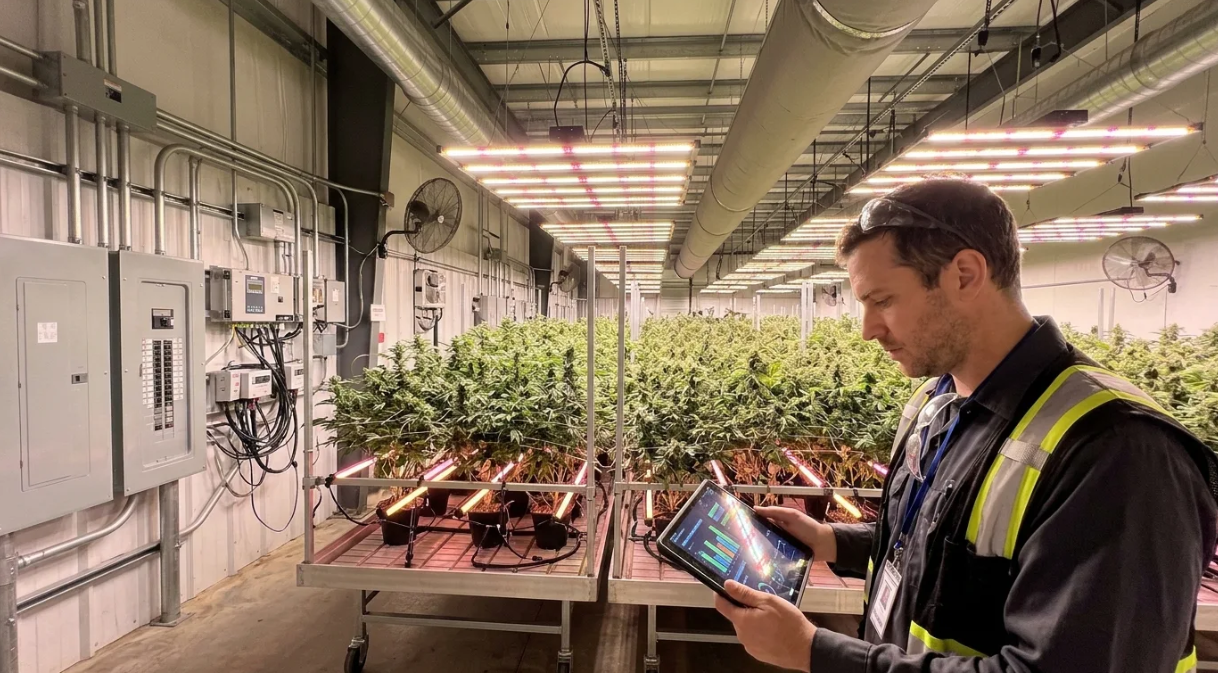
The return on investment of under-canopy lighting depends on the additional saleable flower produced, electricity consumption, fixture costs, installation expenses, and the market value of the harvested product.
A lighting system that increases flower production may still have an unfavorable financial return if its electricity and operating costs exceed the additional revenue.
Under-Canopy Lighting ROI Formula
Use the following formula to estimate the financial return:
Net Additional Revenue = Additional Saleable Flower Revenue − Additional Operating Costs
ROI (%) = (Net Financial Gain ÷ Initial Investment) × 100
For a more detailed calculation, include electricity, maintenance, installation, and other recurring costs.
Example: Calculating Under-Canopy Lighting Electricity Costs
Consider a flower room using 20 supplemental LED fixtures rated at 120 watts each.
Assume:
- Number of fixtures: 20
- Fixture wattage: 120 W
- Daily operating time: 12 hours
- Electricity rate: $0.12 per kWh
- Flowering cycle: 60 days
| Calculation | Result |
|---|---|
| Total connected lighting load | 2,400 W |
| Total power consumption | 2.4 kW |
| Daily electricity consumption | 28.8 kWh |
| Electricity consumption per 60-day cycle | 1,728 kWh |
| Electricity cost per cycle | $207.36 |
This example calculates the incremental electricity cost of the supplemental lighting system. It does not include cooling, installation, maintenance, or equipment depreciation.
What Determines Under-Canopy Lighting Payback?
Several factors determine whether the additional lighting investment is financially worthwhile:
- Additional saleable yield: Measure the extra marketable flower produced, not simply total harvested biomass.
- Product value: Use the actual selling price or contribution margin of the additional product.
- Electricity costs: Calculate consumption using fixture wattage, operating hours, and local utility rates.
- Cooling requirements: Additional lighting electricity can increase HVAC demand.
- Equipment costs: Include fixtures, drivers, mounting hardware, wiring, and installation.
- Product consistency: Consider whether improved consistency reduces rejected batches, grading losses, or other quality-related costs.
How to Measure Actual ROI
Compare a room or cultivation area using supplemental lighting with a comparable overhead-only control. Keep cultivar, plant density, environmental conditions, and cultivation practices as consistent as possible.
Record the following measurements:
- Total dry saleable flower weight
- Grade distribution
- Cannabinoid and terpene test results
- Electricity consumption
- Cooling and HVAC energy use
- Equipment and installation costs
A complete ROI calculation should use the additional revenue generated by saleable production, minus all incremental costs associated with the supplemental lighting system. The under-canopy lighting ROI guide provides worked examples at different facility scales.
An industry survey found that 65% of commercial growers considering new lighting in the next 12 months want to explore ways to augment top lighting. LED adoption in flower rooms has hit 77%, up 62 percentage points since 2016. The frontier has moved from "what kind of light" to "where you put it."
One practical detail that often gets overlooked: in some jurisdictions, utility rebates have covered 100% of under-canopy lighting costs. DLC-listed LED fixtures frequently qualify for energy efficiency incentive programs. Check the rebate eligibility page to see what programs apply to your facility and location.
Common Under-Canopy Lighting Problems and How to Avoid Them
An under-canopy lighting flower room can achieve better light distribution, but poor fixture placement, excessive intensity, and inadequate environmental management can reduce its effectiveness.
Uneven Light Distribution
Problem: Some lower bud sites receive significantly more supplemental light than others.
Solution: Measure PPFD at multiple positions beneath the canopy. Adjust fixture spacing, orientation, and mounting positions to improve uniformity.
Excessive Supplemental Light Intensity
Problem: Adding too much supplemental light can increase total photon exposure beyond the intended lighting strategy.
Solution: Measure combined light exposure from overhead and supplemental fixtures. Use dimmable fixtures or lighting controls where available.
Restricted Airflow
Problem: Poorly positioned fixtures and mounting hardware can obstruct airflow beneath dense canopies.
Solution: Maintain adequate clearance around fixtures and avoid blocking fans, ventilation pathways, or irrigation equipment.
Increased Electricity and Cooling Costs
Problem: Additional lighting increases electricity consumption and may increase the cooling load.
Solution: Calculate total fixture wattage, operating hours, and HVAC requirements before expanding the lighting system. Evaluate additional saleable yield against total incremental energy costs.
Incorrect Spectrum Selection
Problem: Selecting a fixture based only on its advertised wavelength or color temperature may not provide the desired spectral distribution.
Solution: Review the manufacturer's spectral power distribution, photosynthetic photon efficacy, and compatibility with the existing lighting system.
Inadequate Light Measurements
Problem: Measuring only at the top of the canopy can conceal substantial differences in light availability throughout the plant.
Solution: Create a PPFD measurement map covering upper, middle, and lower canopy positions. Repeat measurements after installation and as the canopy develops.
The key principle: A successful under-canopy lighting flower room depends on the complete lighting environment, not simply the number of fixtures installed.
Frequently Asked Questions
Does under-canopy lighting replace overhead flower room lights?
No. Under-canopy bars are supplemental. They add 120 to 360 watts per fixture to redistribute photons to lower bud sites. Your overhead fixtures still provide the primary 700 to 1,500 µmol/m²/s that drives top-canopy production.
When should I turn on under-canopy lights during the flower cycle?
Most growers activate them around day 14 to 21 of flower. This is when the canopy has thickened enough that lower sites begin losing meaningful light from overhead. Earlier activation wastes energy on sites that don't yet need supplemental photons.
What PPFD should I target with under-canopy lighting?
Aim for 100 to 150 µmol/m²/s in early flower, ramping to 200 to 300 µmol/m²/s in late flower. These measurements should be taken at the actual bud sites, not at the bar surface.
Is an under-canopy lighting flower room worth it for small grows?
The research was conducted in commercial settings, but the physics apply at any scale. If your flower canopy is dense enough to block light from lower bud sites (and it almost certainly is), supplemental under-canopy light will improve lower bud quality and yield. The ROI calculation just depends on your cost per watt and the value of your product.
What's the difference between under-canopy and inter-canopy lighting?
Under-canopy (or sub-canopy) lighting sits below the lowest foliage and points upward. Inter-canopy lighting sits at mid-plant height and projects horizontally between rows. Both work, but sub-canopy lighting is simpler to install and more practical for standard table configurations.
Should under-canopy lights match the spectrum of my overhead fixtures?
Running full-spectrum white light both overhead and below avoids creating conflicting spectral signals that can affect plant morphology and photoreceptor responses. Adding more red below a canopy that's already red-shifted from overhead filtering is counterproductive in most cases, though cultivar-specific testing can reveal exceptions.
Can utility rebates cover the cost of under-canopy lighting?
In some cases, yes. DLC-listed LED fixtures qualify for utility energy efficiency programs in many North American jurisdictions. Some growers have reported rebates covering the entire cost of their under-canopy installation.
Does under-canopy lighting affect product consistency?
Significantly. The 2025 Garrido study found that supplemental canopy lighting reduced variability in THC and terpene yields by over 50%. For medical cannabis producers or any operation targeting batch consistency, this may be the most valuable benefit.
How much electricity does under-canopy lighting use?
Electricity consumption depends on fixture wattage, the number of installed fixtures, and daily operating hours. For example, 20 fixtures rated at 120 watts each consume 2.4 kWh per hour. Operating them for 12 hours uses 28.8 kWh, excluding additional HVAC energy requirements.
Does under-canopy lighting increase total DLI?
Yes. Supplemental under-canopy fixtures can contribute additional photons to the plant's daily light exposure. However, the actual increase depends on fixture output, operating time, light distribution, and the amount of light reaching the measured plant location.
What is the difference between under-canopy and sub-canopy lighting?
Under-canopy and sub-canopy lighting generally describe the same supplemental lighting approach: fixtures positioned beneath the plant canopy to illuminate lower plant tissue. Inter-canopy lighting is different because fixtures are positioned within the plant canopy, often at middle or lower plant heights.
Can under-canopy lighting improve lower bud development?
Supplemental lighting can improve light availability in shaded lower canopy areas. Research has reported improvements in dry flower yield and product characteristics, although the results depend on cultivar, fixture configuration, and growing conditions.
Is full-spectrum LED lighting better than red-only under-canopy lighting?
Not necessarily. The best spectrum depends on the cultivation environment, fixture output, and plant response. Research on cannabis lighting spectra has shown that different combinations of red, blue, and white light can influence inflorescence production and plant development. However, results from overhead lighting studies should not be assumed to apply directly to every under-canopy installation.
How do you measure under-canopy lighting performance?
Use a quantum sensor to measure PPFD at consistent positions throughout the upper, middle, and lower canopy. Compare measurements before and after supplemental lighting installation. Track total flower yield, saleable product quality, energy consumption, and operating costs to evaluate performance.
Can under-canopy lighting cause light stress or heat damage?
Yes. Lower canopy tissue is adapted to shade conditions, and excessive supplemental intensity can cause photobleaching, leaf curling, or premature leaf drop. Fixtures mounted too close to foliage can also create localized heat stress. Start at reduced intensity, maintain proper clearance, and ensure adequate airflow beneath the canopy.
What should commercial growers consider before purchasing under-canopy LEDs?
Evaluate PPF output, PPFD distribution, photon efficacy, spectrum, fixture dimensions, electrical compatibility, environmental protection, dimming capabilities, and manufacturer support. These specifications help determine whether a fixture is suitable for the physical and electrical requirements of the flower room.
Ready to evaluate under-canopy lighting for your flower room? Schedule a free consultation with a lighting specialist to discuss your facility layout, PPFD targets, and ROI.