Even light across each tier
Review average intensity and uniformity at the intended mounting distance. Bar placement and tier edges matter as much as the fixture’s rated output.
LIGHTING FOR STACKED FOOD PRODUCTION
Plan lighting for leafy greens, herbs, microgreens, and other food crops—with uniformity, usable space, and service access in mind.
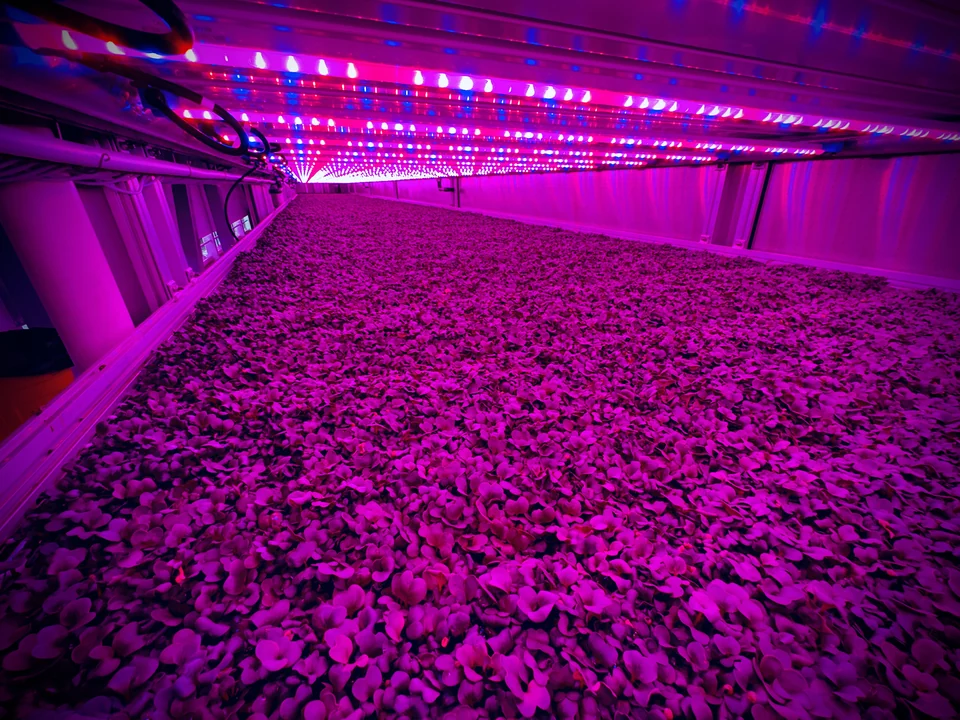
START WITH YOUR GROWING GOALS
Short mounting distances and repeated tiers make the relationship between light bars, crop height, and rack geometry especially important. Design the lighting around the crop and the full growing cycle.
Review average intensity and uniformity at the intended mounting distance. Bar placement and tier edges matter as much as the fixture’s rated output.
Allow for crop growth, fixture depth, irrigation, airflow, and access for planting, harvesting, and cleaning.
Consider cleaning, connection access, and power-supply service. Repeated tiers make small installation decisions important across the whole facility.
LIGHTING OPTIONS
Compare modular bars and connected linear fixtures against the shelf dimensions, crop targets, and installation approach.
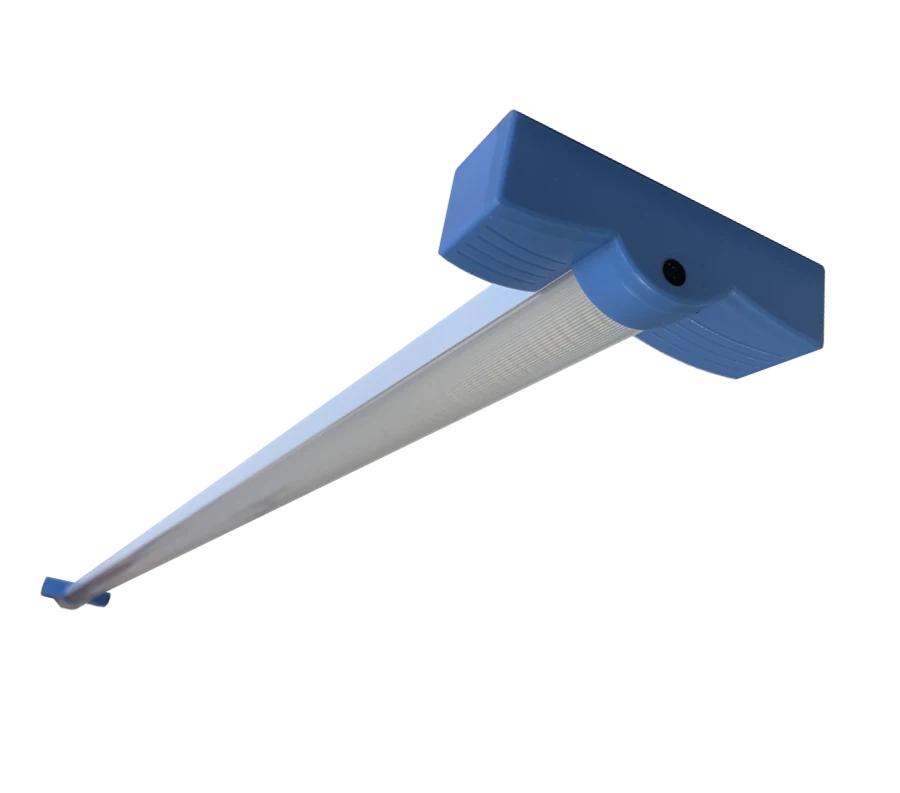
Food-crop vertical farming
Modular light bars for leafy greens, herbs, microgreens, and other food-crop applications in stacked growing systems.
Installation notes: External power supply. Bar spacing, tier clearance, and driver access are part of the final design.
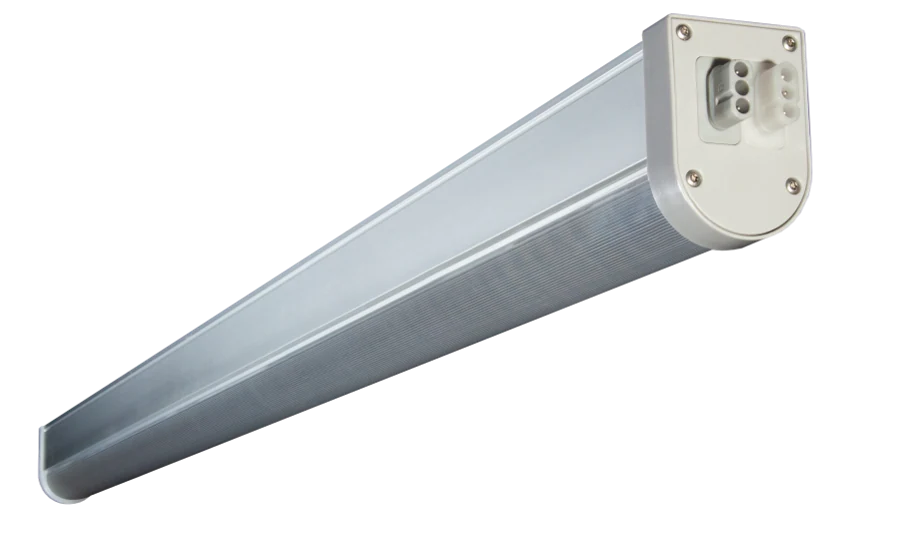
Propagation & stacked food crops
Linear lighting for propagation areas and stacked food production, with connected runs that can follow the growing layout.
Installation notes: Flush-mount brackets; end-to-end links or connection cables. Verify row length and electrical connection limits.
IN PRACTICE
A tour of Vertical Harvest’s farm in Westbrook, Maine, covering the growing racks, crop movement, irrigation, and heat recovery.
PLAN THE WHOLE SYSTEM
Coordinate lighting with irrigation, airflow, cleaning, and crop handling across the farm.
Talk to a Lighting ExpertDocument crop species, production stages, DLI or PPFD targets, light periods, growing area, and minimum and maximum canopy height.
Review fixture spacing, mounting distance, tier edges, and any obstructions. Check distribution at the canopy rather than inferring coverage from watts.
Coordinate wiring, driver locations, cleaning, airflow, and irrigation. Make it possible to access connections and replace components without disrupting adjacent tiers.
A FEW PRACTICAL ANSWERS
Have a question about your facility?
Talk it through with Thrive.
These lighting options focus on leafy greens, herbs, microgreens, and other food crops grown in stacked systems. Match fixture choice and spacing to your crop’s light requirements and rack dimensions.
The appropriate mounting distance depends on the fixture, bar spacing, desired intensity, and crop height. Review a lighting layout at the actual growing distance rather than applying a universal clearance.
An average can hide brighter and darker areas within a tier. Review the distribution across the full growing area so the layout supports your production goals at the edges as well as the center.
Strata is rated at 30 W per light bar. Total installed power depends on the number of bars and the selected power arrangement.
Start with your crop’s light targets, rack dimensions, and mounting height. A lighting layout should show fixture spacing, quantity, and light distribution across each tier.
KEEP EXPLORING
Review published examples before developing a plan for your own growing system.
GROWER’S JOURNALExplore the relationship between crop requirements, fixture choice, and project economics.
PRODUCT SUPPORTAccess Strata and Infinity XE specifications and support resources.
RELATED APPLICATIONExplore stage-specific lighting and Strata HP on the Indoor Cannabis page.
YOUR FACILITY. YOUR GOALS. OUR EXPERTISE.
Share your crop, rack dimensions, growing heights, and production targets. We’ll help build a lighting plan that fits.