Choose a crop-specific target
Leafy greens, fruiting vegetables, herbs, and ornamentals have different light needs. Set a DLI target for the crop and confirm its light and dark periods.
LIGHTING FOR FOOD & FLOWERS
Build a supplemental lighting plan around your crop, your greenhouse, and the sunlight the season brings.
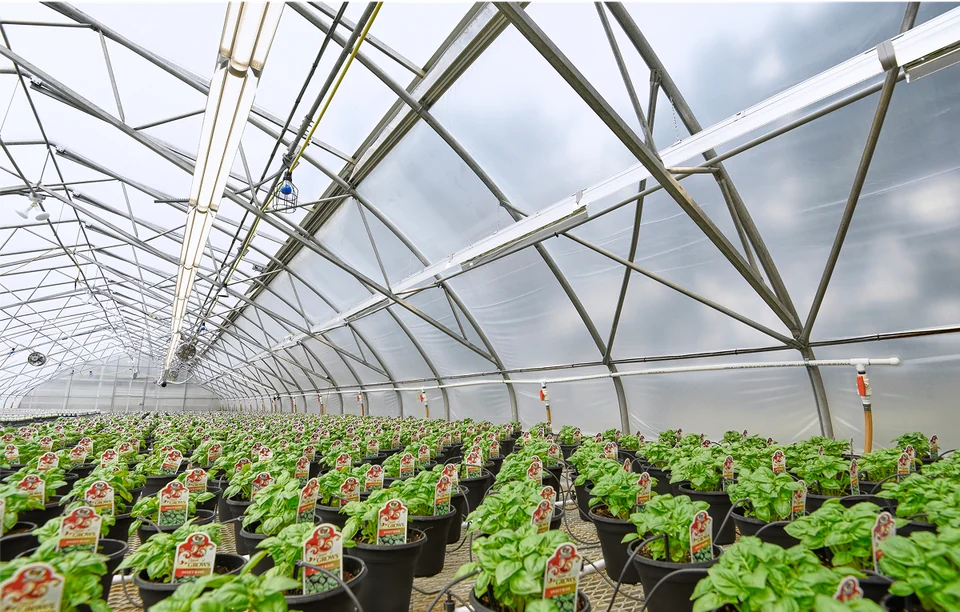
START WITH YOUR GROWING GOALS
Sunlight changes throughout the year. Glazing, structure, shade, and crop spacing affect how much reaches the canopy. Daily light integral (DLI) is the amount of light your crop receives over a day. Use it to plan supplemental lighting around your crop's target.
Leafy greens, fruiting vegetables, herbs, and ornamentals have different light needs. Set a DLI target for the crop and confirm its light and dark periods.
Look at the months you actually grow. Historical sunlight data supports early planning. Measurements at the canopy show what your greenhouse actually gets.
Balance light distribution with fixture placement, structural shading, electrical capacity, and access for maintenance.
LIGHTING OPTIONS
Use required canopy intensity and available mounting height to narrow the options. Fixture wattage alone cannot tell you how many lights you need.
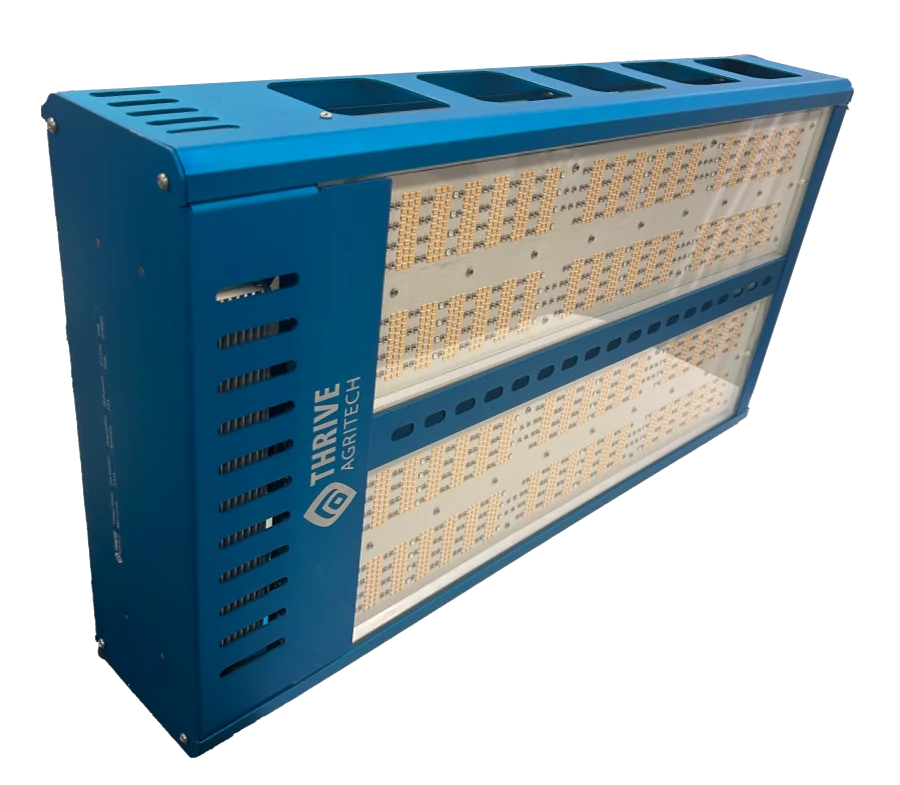
High-output top lighting
Supplemental top lighting for commercial greenhouses. Match mounting height and fixture spacing to your crop’s light target.
Installation notes: Integrated driver and hook mounting. Confirm supply voltage, dimming, mounting height, and circuit limits.
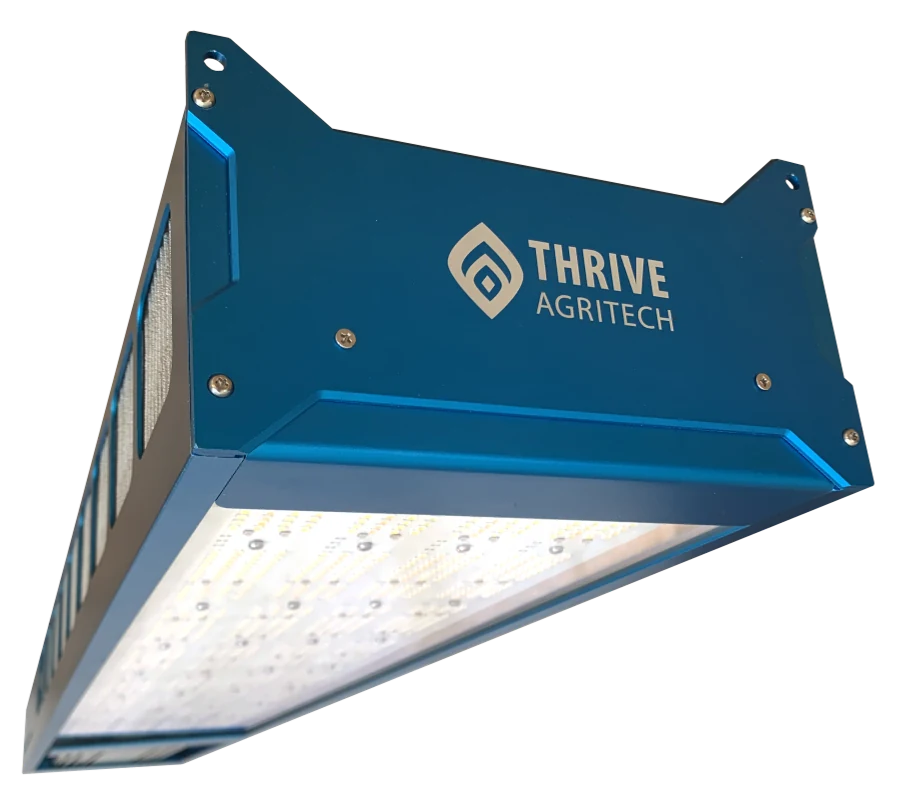
High-output greenhouse lighting
A top-lighting option for greenhouses that need higher output at each mounting point.
Installation notes: Internal driver in the standard model. If you plan to use remote power, check the configuration with us.
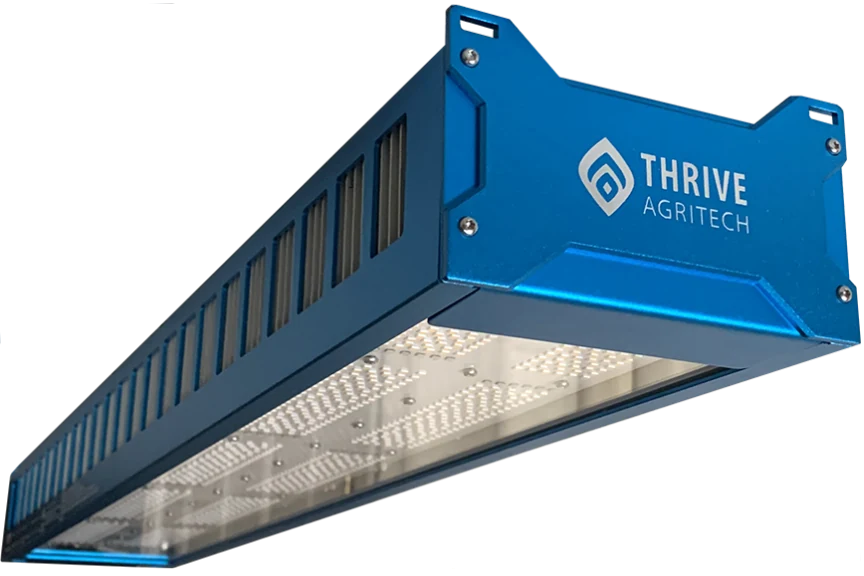
Versatile top lighting
A top-lighting option for greenhouse supplementation. Match output and spacing to your crop and greenhouse layout.
Installation notes: External driver. Plan fixture mounting and access to the power supply.
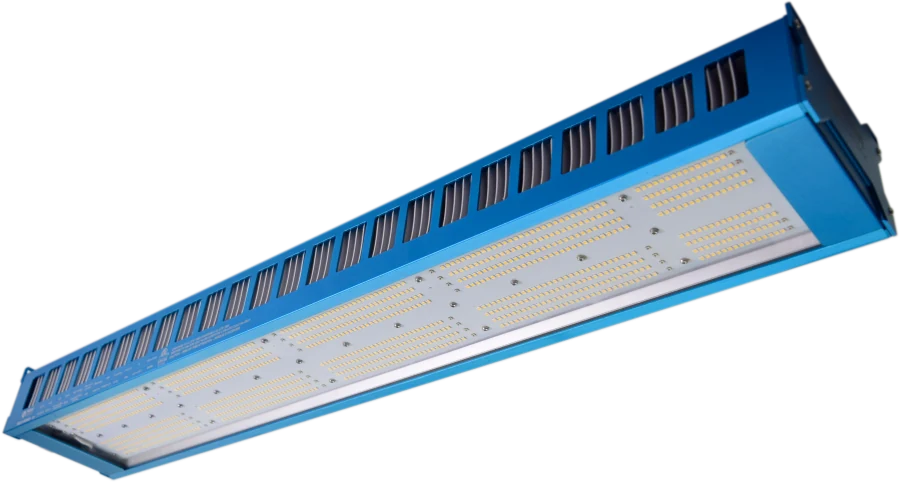
Greenhouse supplemental lighting
A 300 W option for greenhouse supplementation, with fixture spacing matched to the desired canopy light level.
Installation notes: External driver. Review mounting height, spacing, and the voltage-specific configuration.
PUT YOUR SEASON INTO PERSPECTIVE
Choose your location, crop target, and maximum daily light period. Compare monthly sunlight with the supplemental light needed to reach your target.
Open calculator in a new tab (opens in a new tab)For the U.S. and Canada. Estimates use monthly historical sunlight averages, not a daily forecast. Power estimates assume a fixture efficacy of 2.8 µmol/J before losses between the lights and crop. Start with a crop-appropriate target; final fixture quantity requires a lighting design.
IN PRACTICE
Thrive’s greenhouse work spans ornamental production, research facilities, and cannabis cultivation. The common starting point is the crop, the greenhouse, and the light already available.
PLAN THE WHOLE SYSTEM
Use your light estimate, greenhouse layout, crop schedule, and power availability to develop a lighting plan.
Talk to a Lighting ExpertCheck light where the plants grow, across representative locations. Account for glazing, structure, shade cloth, and seasonal obstructions.
Supplemental lighting can run during daylight or extend the day before sunrise or after sunset. Set a crop-specific schedule that preserves the required dark period. If you use blackout curtains, measure canopy sunlight while following your usual curtain schedule.
Confirm mounting points, power availability, distribution, and dimming. Monthly averages help with planning but don’t show whether your lighting will meet the target on every day.
A FEW PRACTICAL ANSWERS
Have a question about your facility?
Talk it through with Thrive.
Daily light integral is the amount of photosynthetically active light a plant receives over a day, expressed in mol/m²/day. It combines intensity and time, so it is more useful for daily light planning than a single instantaneous reading.
No. Estimated mode uses historical sunlight for your region and the share of that sunlight you expect to reach the crop. Measured mode uses monthly sunlight measurements you enter from canopy height. Both support early planning; final fixture placement requires a lighting design for your greenhouse.
Yes. Choose the relevant starting point or enter your own target, then confirm the required photoperiod for the species and cultivar. DLI alone does not determine flowering response.
Yes. Select a cannabis crop stage or enter your own DLI target. The presets are research-based examples with the limitations shown in the tool. Confirm your crop target and dark period. If you use blackout curtains, enter canopy sunlight measured while following your usual blackout schedule.
Watts per square foot gives an early estimate of electrical power for your growing area. The calculator assumes 2.8 µmol/J fixture efficacy before losses between the lights and crop. Fixture count also depends on light distribution, spacing, mounting height, and the selected configuration.
The calculator shows which data is missing and does not provide a complete seasonal estimate. Retry the lookup, enter monthly sunlight measurements from your canopy, or explore a saved example. Use your own site data before making a lighting decision.
KEEP EXPLORING
Explore practical considerations for a supplemental lighting design.
MEASUREMENT GUIDELearn how to measure the light reaching your crop and use it in a supplemental lighting plan.
VIDEO · CANNABIS GREENHOUSESee an earlier Thrive lighting installation at Strawberry Fields, a cannabis greenhouse.
CUSTOMER STORY · 2017Read the 2017 announcement of Strawberry Fields’ Boost installation at its cannabis greenhouse.
YOUR FACILITY. YOUR GOALS. OUR EXPERTISE.
Share your crop, location, growing schedule, and greenhouse layout. We’ll help turn the light requirement into a practical design.