Research Grow Lights: 2026 Glossary, Terms & Benchmarks
Master research grow lights with a 2026 glossary of PAR, PPFD, DLI, spectrum, efficacy and more—clear definitions plus pro tips. Get the guide.
TL;DR
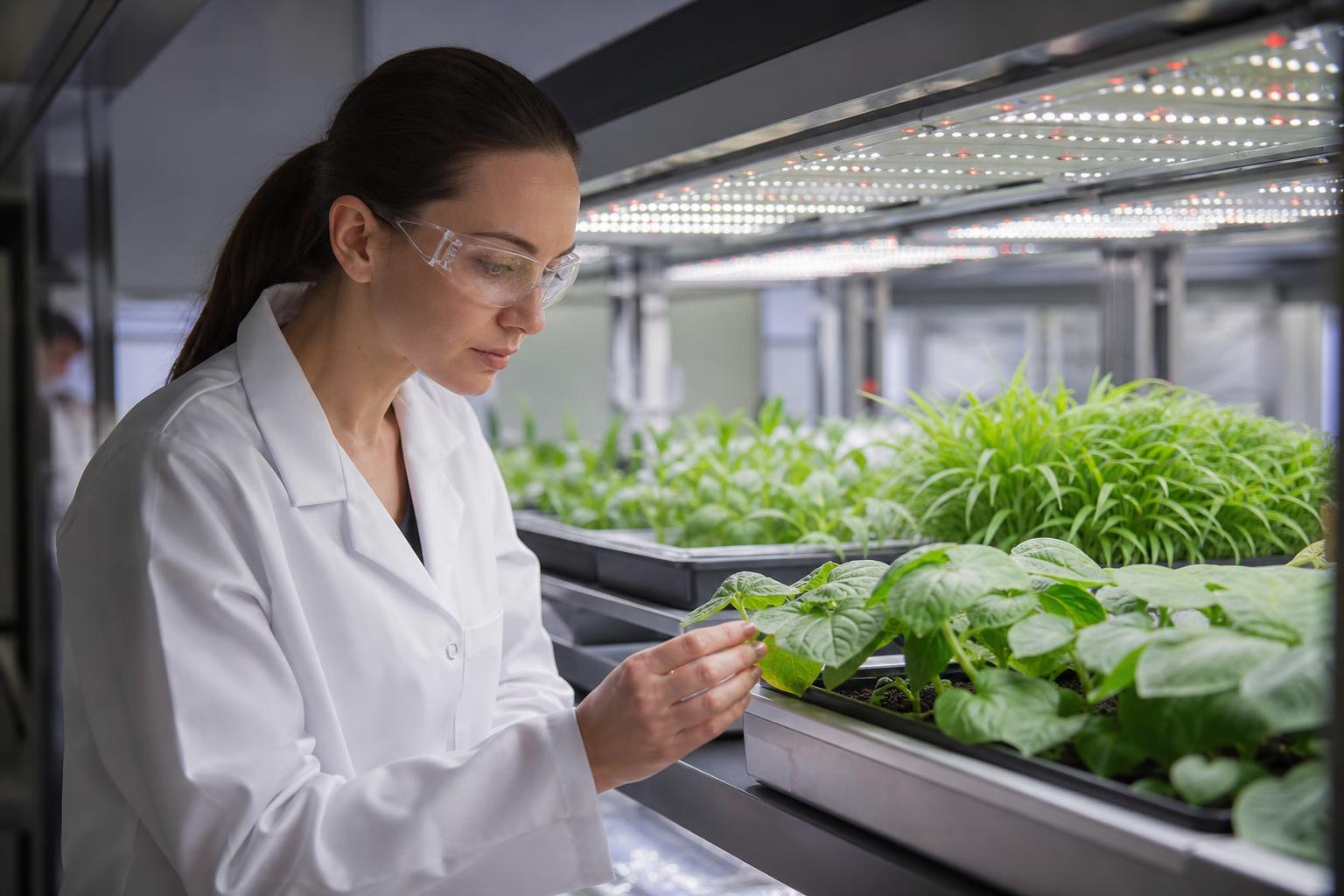
Research grow lights serve two distinct worlds: scientific labs running controlled plant experiments and commercial growers evaluating lighting investments. This glossary covers every critical term, from PAR and PPFD to photomorphogenesis and thermal droop, with current benchmarks and practical context. Understanding these terms helps researchers write better protocols and helps growers avoid misleading specs when comparing fixtures.
Whether you’re configuring a growth chamber or planning a facility buildout, this reference gives you the vocabulary to make informed lighting decisions. If you need help translating these terms into a real lighting plan, schedule a free consultation with a lighting specialist.
Quick Answer
Research grow lights are lighting systems designed to provide plants with the precise light intensity, spectrum, and photoperiod needed for controlled plant growth. In scientific research, they create repeatable environmental conditions for experiments, while commercial growers use them to maximize crop yield, energy efficiency, and plant quality. The most important metrics when evaluating research grow lights are PPFD, DLI, PPE, spectrum, uniformity, and system-level efficacy rather than brightness measured in lumens.
Research Grow Lights at a Glance
Topic | Quick Answer |
|---|---|
Best lighting technology | LED |
Most important metric | PPFD |
Measures total daily light | DLI |
Measures efficiency | PPE (µmol/J) |
Ideal commercial LED efficacy | 2.8–3.5+ µmol/J |
Research priority | Uniformity and repeatability |
Commercial priority | Yield and operating cost |
PAR range | 400–700 nm |
Light used for flowering | Red + Far Red |
Light for vegetative growth | Blue |
Why a Grow Light Glossary Matters
The phrase “research grow lights” means different things to different people. A plant biologist at a university needs fixtures that produce repeatable spectra across 24 simultaneous treatments in a growth chamber. A cannabis cultivator needs to decode spec sheets and figure out whether a fixture’s claimed efficiency holds up under real operating conditions. Both audiences share the same problem: the terminology is dense, often misused by manufacturers, and rarely explained in one place.
This glossary bridges that gap. It covers the measurement terms that define fixture performance, the spectrum concepts that drive plant biology, the technology types available today, and the infrastructure and economics vocabulary that determines whether a lighting investment actually pays off.
Discussions on ResearchGate reveal that lab researchers frequently ask basic questions about LED setup for growth chambers. They’re experts in biology but not in lighting engineering. Meanwhile, practitioners on grower forums consistently report that they trust third-party lab data over manufacturer claims when evaluating fixtures. Both groups need the same foundational knowledge, just applied differently.
Light Measurement Terms
These are the numbers that define how much useful light a fixture produces and how efficiently it does so. Getting these right is the difference between a well-lit experiment and wasted grant money, or between a profitable grow room and an energy bill that eats your margins.
PAR (Photosynthetically Active Radiation)
PAR refers to the wavelengths of light between 400 and 700 nanometers that drive photosynthesis. This is the critical clarification that trips people up: PAR is a range of wavelengths, not a unit of measurement. You cannot measure “PAR” the way you measure temperature. When someone says a fixture produces “high PAR,” they usually mean it produces a high number of photons within that 400–700 nm range, which is actually measured as PPFD (below).
Lumens measure brightness as the human eye perceives it. Plants don’t care about lumens. A fixture can produce impressive lumen numbers while delivering mediocre photon counts in the wavelengths plants actually use. For a deeper explanation of the unit that does matter, see this guide on what a micromole is.
PPF (Photosynthetic Photon Flux)
PPF measures the total number of PAR photons a fixture emits per second, expressed in micromoles per second (µmol/s). Think of PPF as the capacity of a faucet. It tells you the fixture’s total output but says nothing about how much of that light actually reaches the plant canopy. Light scatters, reflects off walls, and spreads across a room. PPF is useful for comparing two fixtures in isolation, but it’s not the metric that determines plant growth.
PPFD (Photosynthetic Photon Flux Density)
PPFD measures the number of PAR photons landing on a specific area per second, expressed in micromoles per square meter per second (µmol/m²/s). This is the number that directly correlates with plant growth because it describes what the plant actually receives, not what the fixture emits into the air.
A general recommendation places optimal PPFD between 400 and 800 µmol/m²/s for most crops. But ranges vary significantly by species and growth stage:
Crop Type | Target PPFD (µmol/m²/s) |
|---|---|
Microgreens | ~150 |
Lettuce and herbs | ~250 |
Fruiting vegetables | 300–600 |
Cannabis (flower) | 600–900+ |
For researchers, PPFD uniformity across the growing area matters just as much as the absolute number. Uneven light distribution introduces experimental noise that can compromise data. For crop-specific targets in cannabis, this cannabis PPFD guide breaks down targets by growth stage.
DLI (Daily Light Integral)
DLI accounts for both light intensity and duration. It measures the total number of PAR photons delivered to a square meter over a full 24-hour period, expressed in moles per square meter per day (mol/m²/day). Two identical PPFD readings can produce wildly different growth outcomes if the photoperiods differ, which is why DLI is often a better planning metric than a single PPFD snapshot.
The formula:
DLI (mol/m²/day) = (PPFD × photoperiod hours × 3600) ÷ 1,000,000
General DLI targets by plant category:
Light Requirement | DLI Range (mol/m²/day) |
|---|---|
Low light plants | 5–10 |
Medium light plants | 10–20 |
High light plants | 20–30 |
Very high light plants | 30–50 |
For greenhouse growers trying to calculate supplemental lighting needs across seasons, this DLI and PPFD greenhouse guide walks through the math in detail.
PPE (Photosynthetic Photon Efficacy)
PPE, measured in µmol/J (micromoles per joule), is the headline efficiency metric in horticultural lighting. It tells you how many plant-usable photons a fixture produces for every joule of electrical energy consumed. Higher is better, and the benchmarks have shifted dramatically in recent years.
Premium LED grow lights now achieve efficacy ratings of 2.7–3.0+ µmol/J, with top-tier commercial systems pushing beyond 3.5 µmol/J. Some research-grade systems approach 4.0 µmol/J. For context, a 1000W double-ended HPS fixture typically delivers around 1.7–1.9 µmol/J before reflector losses, dropping to roughly 1.5–1.7 µmol/J at the canopy. LED efficacy has roughly doubled in the last five years, compressing payback timelines considerably.
A recent study from Wageningen University showed that LEDs use 44% less energy compared to HPS in comparable growing conditions.
PPFD Uniformity
Uniformity measures how evenly light is distributed across the growing area. A properly designed lighting layout aims for a uniformity ratio of 0.85 or higher, meaning the lowest PPFD reading is at least 85% of the highest. Low uniformity causes uneven growth, inconsistent harvest weights, and unreliable experimental data.
In research settings, uniformity is non-negotiable. Growth chambers designed for plant research must provide consistent conditions across every treatment zone, or the results are indefensible. Commercial operations face the same issue, just measured in dollars: uneven canopy development means lost yield.
Spectrum and Wavelength Terms
Light spectrum determines not just how fast a plant grows but how it grows. The shape of the leaves, the timing of flowering, the plant’s resistance to disease, and the chemical composition of the harvested product are all influenced by which wavelengths reach the canopy.
Light Spectrum
Light spectrum refers to the full range of electromagnetic wavelengths, from ultraviolet through visible light to infrared. For plant growth, the relevant spectrum is broader than PAR alone. While photosynthesis primarily uses 400–700 nm, plant development responds to wavelengths from roughly 260 nm (UV-B) through 780 nm (far-red).
Blue Light (400–500 nm)
Blue light drives vegetative growth, promoting compact leaf development, strong stems, and overall plant structure. It’s essential during early growth stages and for maintaining short, stocky plants. Too little blue light produces stretched, weak stems. Most white LED fixtures include a strong blue component as part of their phosphor-converted spectrum.
Red Light (600–700 nm)
Red light is the primary driver of photosynthesis and biomass accumulation. It stimulates leaf expansion, stem elongation, and is crucial for triggering flowering in photoperiod-sensitive crops. More red photons generally means more leaves and more dry weight.
Far-Red Light (700–850 nm)
Far-red falls just outside the traditional PAR range, but studies show plants respond to wavelengths up to about 780 nm. Far-red light interacts with phytochrome photoreceptors to regulate shade avoidance responses, stem elongation, and flowering initiation. There has been significant recent research into using far-red supplementation to control growth patterns and speed flowering in controlled environments. For a more complete picture, this summary of light spectra impacts on plant growth covers the topic in depth.
Green Light (500–600 nm)
Green light is often dismissed as wasted because leaves reflect much of it (that’s why they look green). But this reputation is wrong. Green light penetrates deeper into the canopy than red or blue wavelengths, reaching lower leaves that would otherwise be shaded. This deeper penetration increases whole-canopy photosynthesis, which is particularly relevant in dense, multi-layer crops and when using under-canopy lighting strategies.
Full-Spectrum Light
Full-spectrum white LED fixtures produce a broad, continuous spectrum that includes blue, green, and red wavelengths in proportions that appear white or warm-white to the human eye. This contrasts with narrow-band red/blue fixtures that produce a pink or purple glow.
Full-spectrum light works well for plants and creates a far more comfortable environment for workers. It also makes it easier to visually assess plant health, since colors appear natural rather than distorted. One researcher on ResearchGate noted that “for normal growth, white LEDs are enough,” adding that combination setups with specific red, blue, and yellow diodes are only necessary when targeting very specific morphological responses.
UV Radiation (UV-A, UV-B)
UV-A (315–400 nm) and UV-B (280–315 nm) sit below the visible spectrum. In controlled doses, UV light can trigger secondary metabolite production, influencing flavor, aroma, and pest resistance. UV-B in particular has been studied for increasing trichome density in cannabis and boosting antioxidant levels in leafy greens.
Emerging research from the University of British Columbia is testing how different LED spectra affect plant immunity against bacterial, oomycete, and fungal pathogens, suggesting that light quality plays a larger role in plant defense than previously understood.
Photomorphogenesis
Photomorphogenesis is light-mediated plant development, completely separate from photosynthesis. Where photosynthesis uses light as an energy source, photomorphogenesis uses light as an information signal. It occurs across a wider spectrum than PAR, spanning approximately 260–780 nm, which includes UV and far-red radiation.
Three developmental stages are particularly affected: seed germination, seedling development (de-etiolation), and the switch from vegetative growth to flowering. Researchers designing experiments with grow lights need to account for photomorphogenic effects, because changing the spectrum changes the plant’s developmental program even if total photon delivery stays constant.
Photoperiod and Photoperiodism
Photoperiod is the duration of light a plant receives in a 24-hour cycle. Photoperiodism is the plant’s biological response to changes in that duration. Short-day plants (like cannabis and chrysanthemum) initiate flowering when darkness exceeds a threshold. Long-day plants flower when light duration increases.
Photoperiod is also the link between PPFD and DLI. A grower can hit the same DLI target with high PPFD over a short photoperiod or moderate PPFD over a longer one, but the photoperiodic response may differ. For cannabis cultivators managing flowering triggers, this photoperiod management guide covers the practical details.
Photoreceptors: Phytochromes, Cryptochromes, and Phototropins
Plants detect light through specialized photoreceptor proteins. Phytochromes absorb red and far-red light and regulate germination, shade avoidance, and flowering timing. Cryptochromes respond to blue and UV-A wavelengths and influence circadian rhythms and stem elongation. Phototropins mediate blue and UV light responses related to phototropism (bending toward light) and stomatal opening. Together, these receptors let plants “see” their light environment and adjust development accordingly.
Grow Light Technology Types
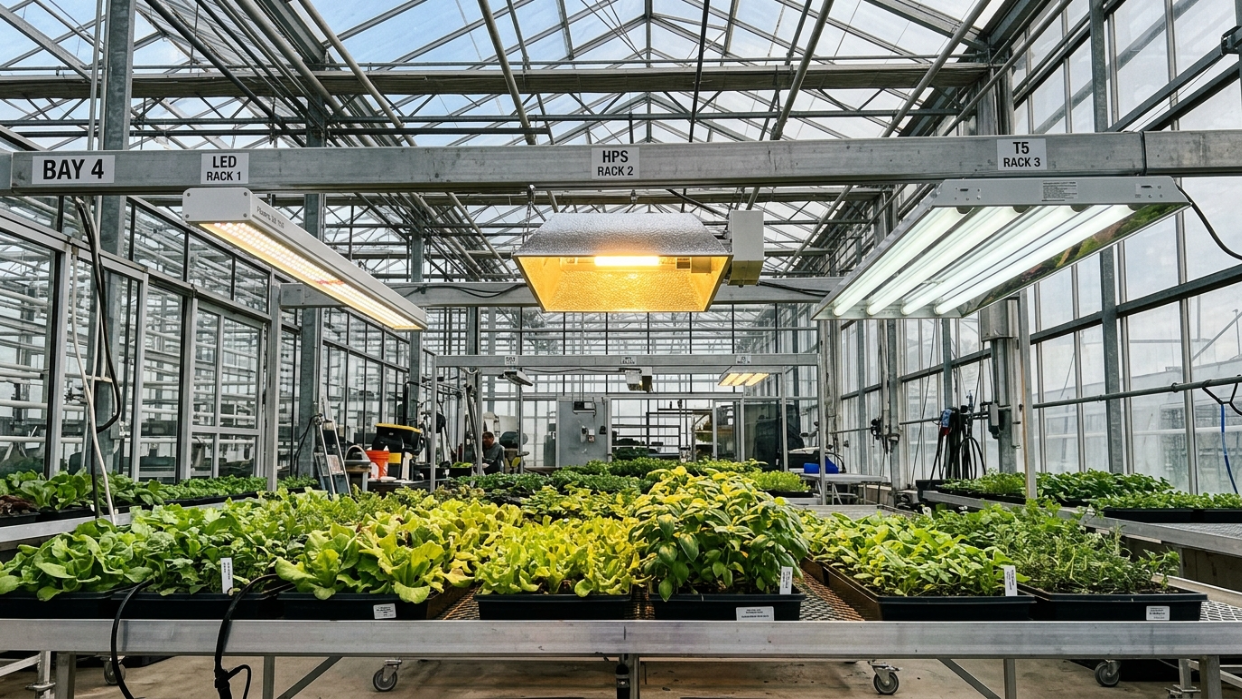
The technology behind a fixture determines its efficiency, spectrum, heat output, and lifespan. The industry has undergone a clear progression, and understanding where each technology sits helps when evaluating older installations or comparing upgrade options.
LED (Light-Emitting Diode)
LEDs are semiconductor devices that emit light when electrical current passes through a diode. They dominate modern horticultural lighting for several reasons: spectral precision (manufacturers can tune the wavelength mix), high efficacy (3.0+ µmol/J in current premium models), low radiant heat directed at the canopy, extraordinarily long life (around 100,000 hours for the diodes themselves), and minimal maintenance.
LEDs are particularly well suited for growth chambers, where researchers need consistent spectral output over thousands of hours without lamp changes that could introduce variability mid-experiment. NASA’s early research with LED grow lights, which produced some of the first published papers on the topic in 1997 and 1998, demonstrated that LEDs could sustain plant growth in completely enclosed environments. That work laid the foundation for today’s sole-source lighting systems in vertical farms and space agriculture.
For a detailed look at how modern LEDs compare to legacy HPS in real-world performance, see this LED vs. HPS comparison guide.
HPS (High-Pressure Sodium)
HPS fixtures produce light by passing electrical current through a tube of sodium gas. They were the dominant technology in greenhouse supplemental lighting and indoor growing for decades. HPS lights emit a warm, yellow-orange spectrum concentrated in the 560–620 nm range, with limited blue output.
A 1000W double-ended HPS fixture typically delivers 1.7–1.9 µmol/J photon efficacy at the source, but system-level performance drops further after accounting for reflector losses, ballast inefficiency, and the fact that HPS bulbs degrade 15–20% over their usable life. HPS fixtures also convert a large percentage of input energy to heat, significantly increasing HVAC loads.
Fluorescent
Fluorescent lamps use a phosphor coating to convert UV energy from mercury vapor discharge into visible light. T5 and T8 tubes were widely used in propagation, tissue culture, and early-stage growth. They’re adequate for starting seedlings and rooting cuttings but lack the intensity to support aggressive growth in later stages. Their role in both research and commercial settings has largely been replaced by LED bars that fit the same mounting configurations with better efficacy and spectral control.
HID (High-Intensity Discharge)
HID is an umbrella category that includes both HPS and metal halide (MH) lamps. Metal halide produces a cooler, bluer spectrum suited to vegetative growth, while HPS favors flowering. HID systems require ballasts, generate substantial heat, and have shorter lamp life compared to LEDs. While still found in older commercial operations, new installations overwhelmingly favor LED technology.
Research Grow Lights vs Commercial Grow Lights
Although they use similar LED technology, research fixtures and commercial production fixtures are designed for different goals.
Feature | Research Grow Lights | Commercial Grow Lights |
|---|---|---|
Primary objective | Experimental repeatability | Maximum crop yield |
Spectrum | Fully adjustable | Crop optimized |
Uniformity | Extremely high | High |
Controls | Advanced programmable lighting | Production scheduling |
Calibration | Laboratory grade | Commercial grade |
Typical users | Universities, research institutes | Greenhouses, indoor farms |
Fixture Types and Configurations
How a fixture is deployed matters as much as what technology it uses. The same LED chip in a top light, an under-canopy bar, or a multi-tier rack produces very different results depending on placement, beam angle, and integration with the growing system.
Top Light
Top lights are overhead fixtures designed for high-output applications: greenhouse supplemental lighting, cannabis flower rooms, and tall-canopy vegetable production. Modern LED top lights combine high PPFD output with relatively low heat emission compared to HPS, reducing the thermal burden on crops and HVAC systems.
Under-Canopy / Inter-Light
Under-canopy fixtures (also called inter-lights) are positioned within or below the plant canopy to deliver photons to shaded lower leaves. Rather than increasing total overhead power, these fixtures redistribute light to where it’s otherwise scarce.
The concept has moved from experimental curiosity to proven production strategy. Research and grower trials have documented meaningful yield gains when light reaches lower canopy zones. Thrive Agritech’s Boost XE is a 120W under-canopy bar designed specifically for this application. For growers evaluating whether under-canopy lighting makes financial sense, this under-canopy lighting ROI guide reviews the evidence.
Supplemental Lighting
Supplemental lighting adds artificial light in greenhouses to augment natural sunlight, especially during winter months, cloudy periods, or at northern latitudes where seasonal DLI drops below crop requirements. The goal is usually to maintain a consistent DLI year-round rather than to replace sunlight entirely.
Sole-Source Lighting
Sole-source lighting provides 100% of the photons a plant receives, with no contribution from sunlight. This is the standard in vertical farms, indoor growth chambers, underground facilities, and space agriculture research. Sole-source systems require careful spectrum design because they cannot rely on sunlight to fill spectral gaps.
Michigan State University’s Controlled-Environment Lighting Laboratory (CELL) is a good example: it uses sole-source LED lighting across two independently controlled growth rooms with 12 deep-flow hydroponic shelves each, enabling 24 different lighting treatments simultaneously. Thrive Agritech’s Strata fixtures are designed for exactly this type of multi-tier, sole-source application.
Multi-Tier Lighting
Multi-tier (or vertical rack) lighting is used in vertical farming and propagation facilities where crops grow on stacked shelves. Fixtures must be slim enough to fit between tiers, produce minimal radiant heat (since the next shelf of plants is inches above the light), and deliver uniform PPFD across narrow growing surfaces. This is where LED’s low-profile form factor and reduced heat output become essential advantages.
Infrastructure and Electrical Terms
These terms don’t appear on the front of a spec sheet, but they determine the total cost of ownership, the reliability of the system, and whether an installation meets code. Practitioners on grower forums consistently emphasize that the “boring” infrastructure decisions often have a bigger financial impact than the fixture selection itself.
LED Driver
The LED driver is the power supply that converts AC line voltage to the regulated DC current an LED fixture needs. Drivers generate heat, add weight to the fixture, and represent the most common failure point in LED grow light systems. Understanding this single component explains a lot about long-term reliability and maintenance costs. For a deeper dive, this guide on LED reliability factors covers what to look for.
Remote/Centralized Power Architecture
Centralized or remote driver systems relocate drivers outside the grow space entirely. This approach reduces canopy-zone heat (lowering HVAC demands), removes hundreds or thousands of potential failure points from the growing environment, and can simplify electrical installation. Thrive Agritech’s OptiDrive is a remote power platform designed specifically for this purpose, available in DC and DE configurations for different facility types.
CEA (Controlled Environment Agriculture)
CEA is the practice of growing plants in an environment where lighting, temperature, humidity, nutrient levels, and CO₂ concentrations are actively monitored and adjusted. Greenhouses with supplemental lighting, indoor vertical farms, and research growth chambers all fall under the CEA umbrella. The “controlled” part is what distinguishes CEA from field agriculture, and lighting is typically the single largest controllable variable.
Growth Chamber
Growth chambers are enclosed environments that provide precise control of light, temperature, humidity, and CO₂ for plant research. They’re used in universities, government labs, pharmaceutical research, and commercial R&D. Lighting in growth chambers must deliver repeatable, uniform conditions across every treatment position. Inconsistent light means inconsistent data. This growth chamber lighting guide covers the specific requirements for research applications.
UL Listing and Safety Certifications
UL, CE, and CSA certifications verify that a fixture meets electrical and fire safety standards. These aren’t optional for institutional or commercial installs. Many building codes require listed equipment, and most utility rebate programs won’t process applications for unlisted fixtures. Always confirm that a fixture is UL-listed (or equivalent) before specifying it for a commercial or research project.
DLC (DesignLights Consortium)
The DLC qualifies commercial LED products for utility rebate programs across North America. A DLC-listed fixture has been independently verified to meet efficiency and performance thresholds. According to the DesignLights Consortium, the standard for premium efficiency has risen significantly, with qualifying products now requiring efficacy levels that would have been considered top-tier just a few years ago. DLC listing can unlock rebates that significantly reduce the upfront cost of a lighting project. Check current rebate eligibility and incentives to see what’s available in your area.
IP Rating
An IP (Ingress Protection) rating indicates a fixture’s resistance to dust and moisture. An IP65-rated fixture, for example, is dust-tight and protected against water jets, making it suitable for humid greenhouse environments. An IP20 fixture is designed for dry indoor use only. Match the IP rating to your growing environment to avoid premature fixture failure.
How to Choose a Research Grow Light
When comparing research grow lights, prioritize the following criteria:
Verify system-level efficacy rather than diode-level claims.
Confirm PPFD maps measured by an independent laboratory.
Check spectral consistency across multiple fixtures.
Ensure PPFD uniformity exceeds 0.85.
Match fixture IP rating to the growing environment.
Verify dimming, scheduling, and programmable spectrum capabilities.
Look for long-term component support and driver reliability.
Confirm safety certifications such as UL, CE, CSA, or DLC where applicable.
Efficiency and Economics Terms
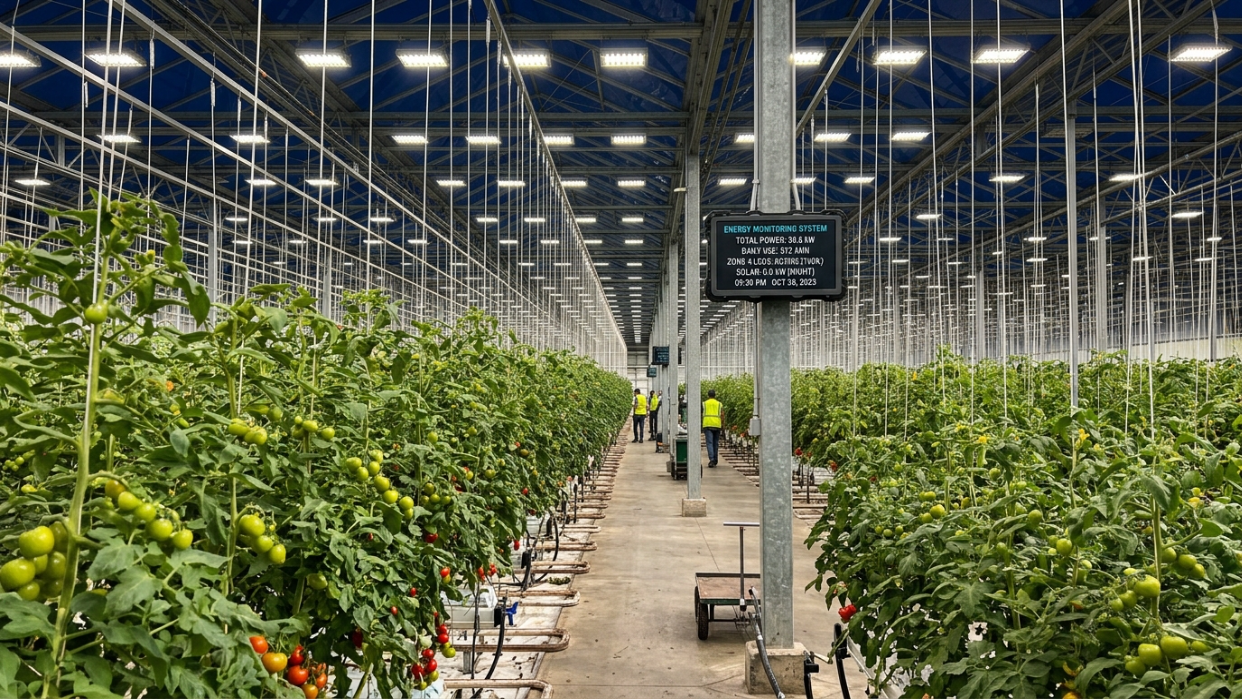
These terms determine whether a lighting system makes financial sense. The physics of light production intersect with the economics of electricity, HVAC, and crop revenue in ways that aren’t always obvious from a spec sheet.
Efficacy vs. Efficiency
Efficacy (µmol/J) measures photon output per unit of electrical energy. Efficiency (%) measures the percentage of input energy converted to useful light. In horticulture, efficacy is the standard metric because it directly ties to plant-usable photons per dollar of electricity. A fixture with 3.0 µmol/J efficacy produces 50% more usable light per watt than one rated at 2.0 µmol/J. For operators managing energy budgets, this guide to reducing operating expenses shows how efficacy improvements translate to real cost savings.
System-Level vs. Diode-Level Efficacy
This is the single biggest spec-shopping trap in the grow light market. Board-level or diode-level efficacy is measured at 25°C under laboratory conditions, before driver losses, thermal droop, optical losses, and housing effects are factored in. System-level efficacy (also called wall efficacy) is measured at the AC input with the fixture at steady-state operating temperature. It’s what your power meter actually sees.
A fixture marketed at 3.0 µmol/J at the diode level may deliver 2.4–2.5 µmol/J at the wall under real operating conditions. Always ask for system-level test data, preferably from an independent lab. This distinction is why grower forums consistently emphasize third-party testing over manufacturer claims.
Thermal Droop
LEDs produce less light as they get hotter. This decrease in output with rising junction temperature is called thermal droop. A fixture tested at 25°C in a lab delivers more photons than the same fixture running at 50–60°C in a grow room. Good thermal management (heat sinks, airflow, driver placement) minimizes droop. Poor thermal design means you’re paying for photons you never receive.
Light Saturation Point
More light isn’t always better. Every plant species has a light saturation point where additional photons produce diminishing returns in photosynthetic rate. Beyond that point, you’re spending money on electricity and generating heat without producing additional growth. In some cases, excessive PPFD can cause photoinhibition, actually damaging the photosynthetic machinery. Knowing your crop’s saturation point prevents overbuilding and wasted energy.
Haitz’s Law
Haitz’s Law is the LED equivalent of Moore’s Law. It projects that the cost per lumen from LEDs falls by a factor of 10 per decade while output per package increases 20x. This means that the economics of LED grow lighting are a moving target in operators’ favor. A fixture investment that barely breaks even today will look increasingly attractive as electricity prices rise and LED costs continue to fall.
Current Research Grow Light Benchmarks (2026)
Metric | Typical Benchmark |
|---|---|
Premium LED efficacy | 2.8–3.5+ µmol/J |
Research-grade LED efficacy | Up to ~4.0 µmol/J |
Recommended PPFD uniformity | ≥0.85 |
LED lifespan | 50,000–100,000 hours |
Typical HPS efficacy | 1.5–1.9 µmol/J |
PAR range | 400–700 nm |
Photomorphogenic response | ~260–780 nm |
Commercial flowering PPFD | 600–900 µmol/m²/s |
Greenhouse supplemental DLI | Crop dependent (typically 10–30 mol/m²/day) |
Key Takeaways
PPFD measures the light plants actually receive and is generally more useful than PPF.
DLI combines light intensity and photoperiod, making it a better indicator of total plant lighting.
LED fixtures now exceed 3.5 µmol/J, making them substantially more efficient than HPS.
System-level efficacy is more meaningful than diode-level specifications because it reflects real operating conditions.
Uniform lighting is essential in research environments because uneven PPFD introduces experimental variability.
Spectrum influences both photosynthesis and plant morphology through photoreceptors.
Research facilities prioritize repeatability while commercial growers prioritize production economics.
Common Mistakes When Comparing Grow Lights
Many buyers compare fixtures using specifications that have little impact on plant growth.
Common mistakes include:
Comparing lumens instead of PPFD.
Ignoring PPFD uniformity maps.
Confusing PAR with PPFD.
Trusting diode-level efficacy instead of system-level efficacy.
Buying based solely on wattage.
Ignoring thermal droop.
Assuming every "full-spectrum" fixture uses the same spectrum.
Overlooking independent laboratory testing.
Frequently Asked Questions
What is the difference between PAR, PPF, and PPFD?
PAR is a wavelength range (400–700 nm), not a unit of measurement. PPF measures the total photons a fixture emits within that range per second. PPFD measures how many of those photons actually land on a given area per second. PPF describes the fixture; PPFD describes the plant’s experience.
How do I calculate DLI from PPFD?
Use the formula: DLI = (PPFD × hours of light × 3600) ÷ 1,000,000. For example, a PPFD of 400 µmol/m²/s over a 16-hour photoperiod gives a DLI of approximately 23 mol/m²/day, which falls in the “high light” range suitable for crops like tomatoes and cannabis.
What PPFD do research growth chambers typically target?
It depends entirely on the species and experiment. Arabidopsis studies often use 100–200 µmol/m²/s, while crop trials for tomatoes or cannabis may require 400–800+ µmol/m²/s. The key requirement in research settings is uniformity across all treatment positions, not just hitting a target average.
Why does system-level efficacy matter more than diode-level specs?
Diode-level efficacy is measured under ideal lab conditions (25°C, no driver losses). Real-world fixtures run hotter and include driver inefficiencies that reduce actual output. A fixture rated at 3.0 µmol/J at the diode may deliver only 2.4 µmol/J at the wall. System-level testing reflects what you actually get for your electricity bill.
Are full-spectrum white LEDs adequate for plant research?
For most standard growth experiments, yes. Full-spectrum white LEDs cover the PAR range with a broad, continuous spectrum that supports normal photosynthesis and development. Specialized experiments targeting specific photomorphogenic responses (shade avoidance, UV stress, far-red flowering triggers) may require supplemental narrow-band wavelengths, but white-spectrum fixtures handle the majority of research needs with minimal configuration.
What is a good PPFD uniformity ratio?
A ratio of 0.85 or higher is the professional standard. This means the lowest PPFD reading in the growing area is at least 85% of the highest reading. Lower ratios produce uneven growth, inconsistent experimental data, and variable harvest weights across a commercial facility.
How has LED efficacy changed in recent years?
LED grow light efficacy has roughly doubled in five years. Early premium fixtures delivered around 2.0 µmol/J. Today’s top-tier systems exceed 3.5 µmol/J, with some research-grade fixtures approaching 4.0 µmol/J. Following Haitz’s Law, this trend will continue, making LED investments increasingly attractive over time.
What role does green light play in plant growth?
Despite the common misconception that plants “don’t use” green light, green wavelengths penetrate deeper into dense canopies than red or blue light. This means they reach lower leaves that are shaded from overhead light, boosting whole-canopy photosynthesis. Green light is particularly relevant in multi-layer cropping systems and when using under-canopy lighting strategies.
Whether you’re outfitting a university growth chamber or planning a commercial lighting retrofit, these terms give you the foundation to evaluate fixtures, compare proposals, and avoid spec-sheet traps. For deeper technical documentation, explore Thrive Agritech’s research whitepapers. And if you’re ready to translate this knowledge into a specific lighting design, talk to a lighting specialist about your project.