Under Canopy Lighting: The Experiment is Over
In the early days of LED adoption, we were narrowly focused on maximizing ‘top down’ efficiency. The goal was simple: replace HPS with fewer watts while hitting target PPFDs at the top of the canopy and this was an acceptable level of success. The market has changed. Market saturation has reduced margins, wholesale prices are compressed, and competition is intense. Status Quo…I don’t think so!
For years, under canopy lighting (UCL) was dismissed as a niche upgrade fraught with inconsistencies and mixed philosophies. Today, the trials are complete, the operating procedures are validated, and the outputs/results are uniformly consistent both quantitatively and qualitatively. Failing to implement under canopy lighting is no longer a strategic choice, but an architectural flaw in your facility design.
A 30-Year-Old Strategy, Finally Perfected
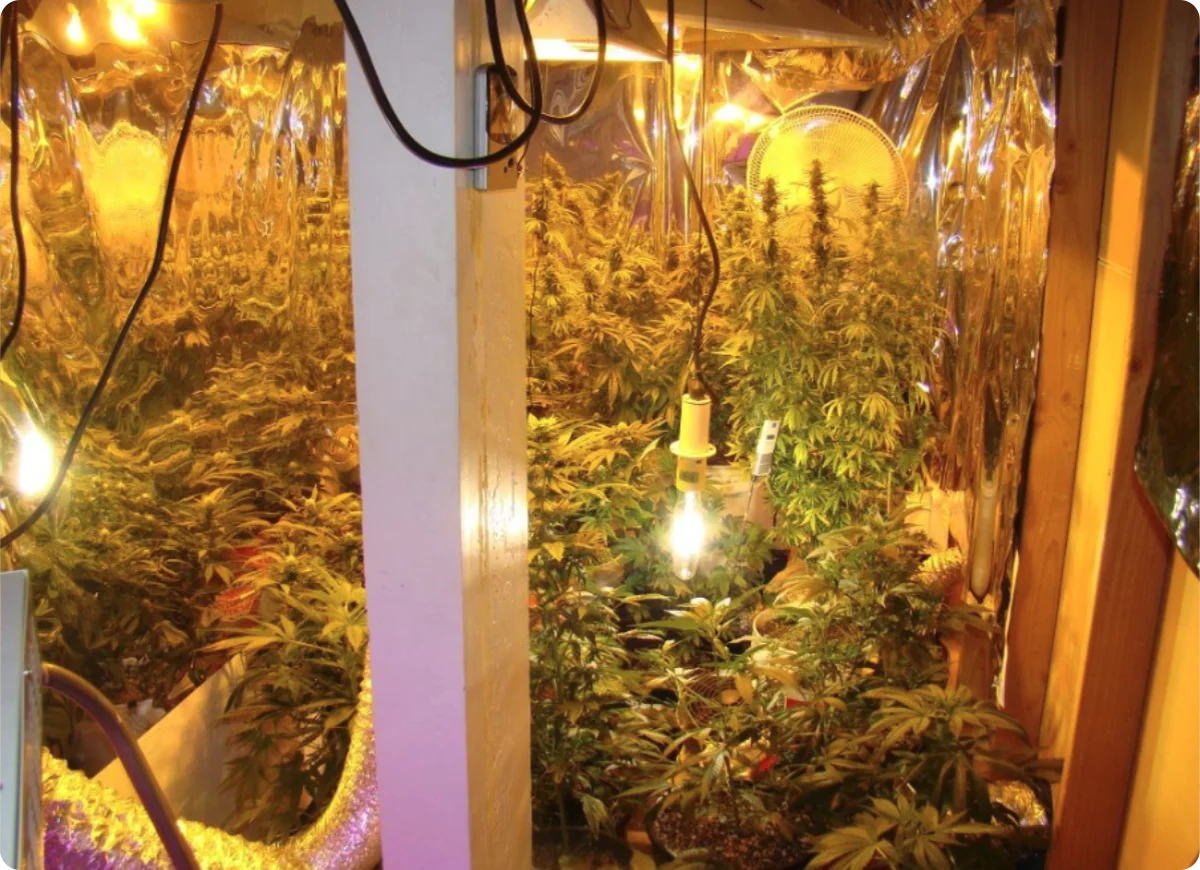
Maximizing cubic footage is not a new trend in cannabis cultivation. More than 30 years ago, dialed-in growers were hanging single-ended HPS bulbs vertically in walkways to deliver deeper light penetration into their canopy. They understood what today’s data confirms: leaving the bottom third of the plant in the dark means leaving money on the table.
The heat load and safety risks of hanging 1000W bulbs at waist height made the approach impossible to scale in a licensed facility. Nearly a decade ago, Thrive Agritech worked with one of our cultivation partners still using this 1000W vertical strategy, to provide a safer, more effective solution for under canopy lighting.
Thrive Agritech took a 30-year-old concept and reintroduced it into a modern, scalable system that enables operators to preserve their profitability.
The Cost of "Dead Space"
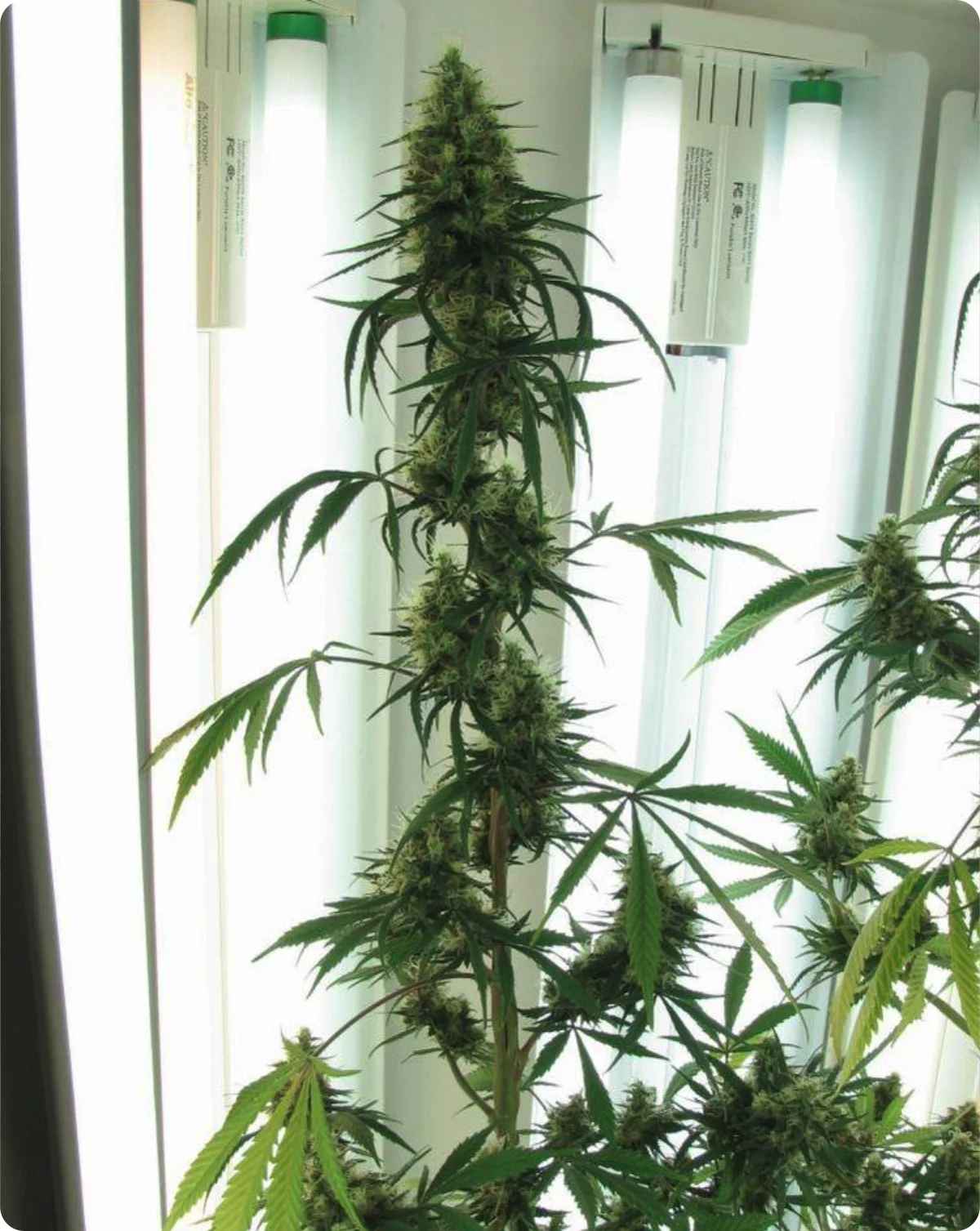
In a saturated market, your most expensive asset is your cubic footage. Traditional cultivation practices and lighting strategies leave the bottom 30-40% of the plant underdeveloped (i.e. larf, B-grade biomass, etc.)
In the absence of under canopy lights, cultivators are essentially paying rent, cooling expenses, and costs of nutrients for "dead" real estate. You’ve already invested the OpEx into that cubic volume; if you aren't activating it with photons, you are subsidizing inefficiency. UCL isn't an "addition"—it’s the reclamation of space you’re already paying for.
Labor: The Silent Margin Killer
Here is how the math breaks down. If your team is spending time and energy aggressively stripping lower laterals, you are paying a shadow tax on labor and overhead.
In other words, you invest 14–21 days in the veg room promoting the development of biomass, only to remove a third of the plant and throw it away on day 21 of flower. Even if you keep that lower growth, this practice is costing you at the finish line in post harvest.
Trimming larfy, B-grade flower takes 2 to 4x longer than trimming the same weight in A-grade tops. And if you run that product through a trim machine, a much larger portion of those B’s ends up as trim rather than saleable flower. Reducing that "touch-time" per plant is often the only difference between a profit and a loss.
The Sorting Ratio: Reality vs. Vanity
Yield is vanity. Your sorting ratio is reality.
Does it matter if you harvest 100+ grams per square foot when a large percentage of it falls to B-grade or trim and sells for a fraction of top-shelf flower.
“The Experiment” made it clear: UCL dramatically shifts the ratio of B-grade to A-grade flower.
By reducing the light intensity gap between the top and bottom of the plant, it eliminates the quality gradient. Without it, your results will be lower quality flowers on the bottom half of every single plant in your facility.
The Bottom Line
We are past the era of guesswork. From vertical HPS bulbs in the ’90s to Thrive Agritech’s pioneering LED innovation nearly a decade ago, the goal has always been the same: total canopy production.
Today, you are not competing against the grower next door, you are competing against the math.
“The Experiment” is over. Every day you operate without under canopy lighting is a day you surrender margin your competitors are already capturing.