Greenhouse Supplemental Lighting Hours: 2026 Formula Guide
Calculate greenhouse supplemental lighting hours using DLI and PPFD. Avoid 16‑hour myths with examples and tips. Get a consult to optimize.
TL;DR
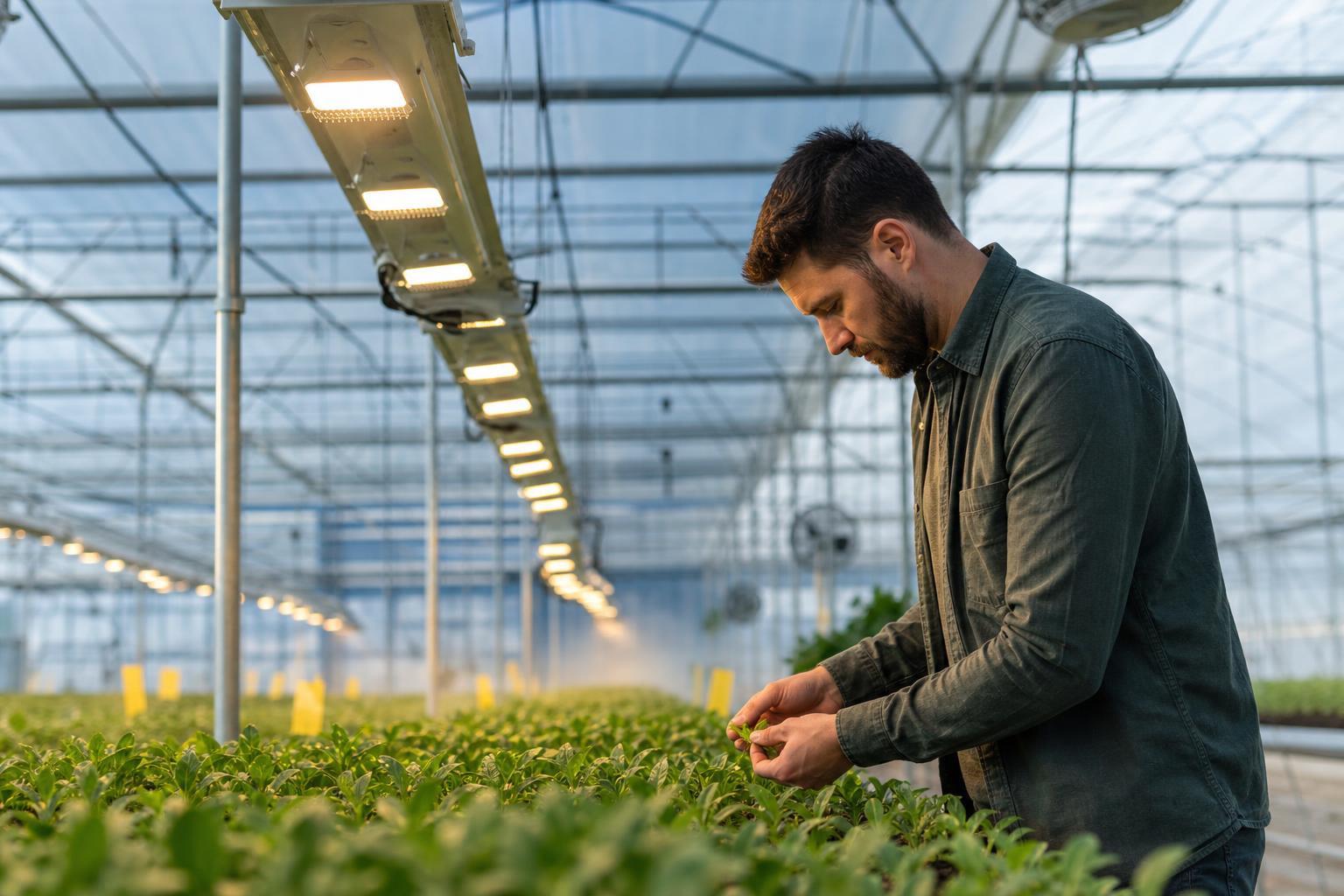
Greenhouse supplemental lighting hours are the daily run time grow lights need to fill the gap between a crop’s target Daily Light Integral (DLI) and the natural sunlight reaching the canopy inside the greenhouse. There is no universal number. The correct value comes from a formula: supplemental DLI needed divided by (fixture PPFD × 0.0036). A winter lettuce greenhouse in the mid-Atlantic might need 11 hours of supplemental light, while the same greenhouse in late spring might need none.
Quick Answer: How Many Hours Should Greenhouse Supplemental Lights Run?
There is no standard number of greenhouse supplemental lighting hours.
Most greenhouses require anywhere from 0 to 12 hours of supplemental lighting, depending on:
- Crop type
- Season
- Geographic location
- Greenhouse light transmission
- Fixture intensity
Typical winter estimates:
Crop | Typical Supplemental Lighting Hours |
|---|---|
Seedlings | 4-8 hours |
Lettuce | 8-12 hours |
Herbs | 6-10 hours |
Tomatoes | 8-14 hours |
Cannabis | 4-8 hours |
The correct calculation is:
Hours = (Target DLI − Greenhouse Sunlight DLI) ÷ (Fixture PPFD × 0.0036)
Growers should calculate supplemental lighting hours from their crop's DLI deficit rather than using a fixed 14- or 16-hour schedule.
Greenhouse Supplemental Lighting Hours
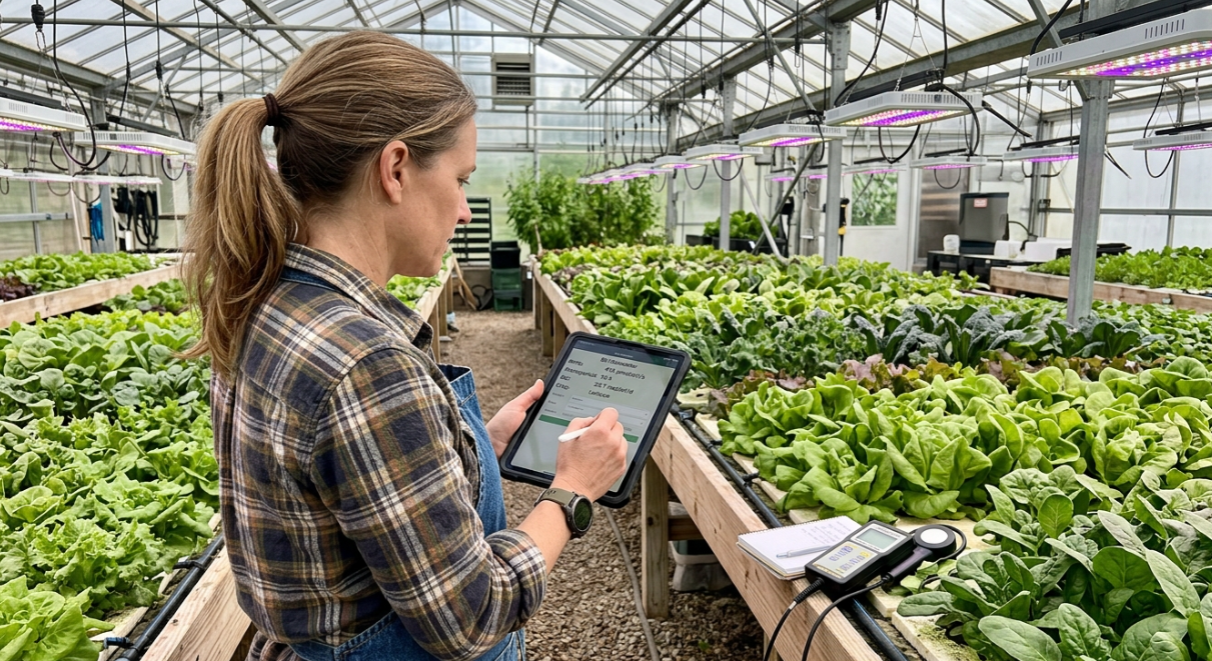
Greenhouse supplemental lighting hours are the number of hours per day that electric grow lights run inside a greenhouse to add plant-usable light when natural sunlight falls short. The correct number is not fixed. It depends on the crop’s target Daily Light Integral (DLI), the natural light that actually reaches the canopy inside the greenhouse, fixture intensity at crop height, crop growth stage, season, and photoperiod requirements.
The formula:
Hours = (target DLI − sunlight DLI inside greenhouse) ÷ (fixture PPFD × 0.0036)
This calculation, outlined by UNH Extension, treats hours as an output of the equation, not a starting assumption. That distinction matters more than most growers realize.
Schedule a free lighting consultation to calculate your greenhouse’s DLI gap and the operating hours your crop actually needs.
Why “14 to 16 Hours” Is the Wrong Starting Point
Search for greenhouse supplemental lighting hours and most results recommend 14 to 16 hours of daily light. That number is not wrong as a rough total photoperiod for certain crops, but it conflates two different things: the total hours the plant perceives light (sunlight plus electric) and the hours the fixtures actually need to run.
Consider a greenhouse in Virginia in December. Outdoor DLI might be around 10 mol·m⁻²·d⁻¹. After glazing and structural losses (which Virginia Tech puts at 30% to 50%), the crop may only receive 5 to 7 mol·m⁻²·d⁻¹ from sunlight. If lettuce needs 14 mol·m⁻²·d⁻¹, the lights must supply the remaining 7 to 9 mol·m⁻²·d⁻¹. Depending on fixture intensity, that could mean anywhere from 7 to 12 hours of supplemental lighting.
Now consider the same greenhouse in April. Outdoor DLI might be 30 mol·m⁻²·d⁻¹, delivering 18 mol·m⁻²·d⁻¹ inside. The lights may not need to run at all. A fixed 16-hour timer would waste electricity every sunny spring day.
Professional growers calculate supplemental lighting hours from DLI deficit, not from a generic schedule.
Understanding the Key Terms
Before running the formula, four terms need to be clear. Confusing them is the single most common mistake in greenhouse lighting conversations.
Daily Light Integral (DLI)
DLI measures the total photosynthetically active radiation a crop receives over 24 hours, expressed as mol·m⁻²·d⁻¹. Purdue Extension compares it to a rain gauge: instead of measuring how fast rain falls at one instant, you measure how much accumulated in the bucket by day’s end. For a deeper look at how DLI calculations work in greenhouse settings, see this DLI greenhouse guide.
PPFD
Photosynthetic Photon Flux Density measures light intensity at a single point in time, in µmol·m⁻²·s⁻¹. It tells you how many photons are hitting the canopy right now. PPFD is the instantaneous measurement; DLI is the daily accumulation of those measurements.
Photoperiod
Photoperiod is the total number of hours per day a plant perceives light, from any source. It governs developmental responses like flowering in photoperiod-sensitive crops such as cannabis, chrysanthemums, and poinsettias.
Supplemental Lighting vs Photoperiodic Lighting
This is where the most confusion lives. Supplemental lighting (also called photosynthetic lighting) uses high-intensity fixtures to increase DLI and drive growth. Photoperiodic lighting uses very low-intensity light (sometimes just 2 to 3 µmol·m⁻²·s⁻¹) to change the plant’s perception of day length without adding meaningful DLI.
Greenhouse Grower explains that photoperiodic lighting typically operates at around 10 footcandles, while supplemental lighting runs at 50 to 75 µmol·m⁻²·s⁻¹ or higher. If the goal is to prevent flowering or create a long-day response, the grower needs photoperiodic lighting. If the goal is yield, crop quality, or faster growth, the grower needs supplemental lighting that meaningfully increases DLI.
For a complete breakdown of this distinction, see the greenhouse photoperiod lighting guide.
How Greenhouse Covering Materials Affect Supplemental Lighting Hours
Different greenhouse coverings transmit very different amounts of sunlight.
Greenhouse Covering | Typical Light Transmission |
|---|---|
New glass | 80-90% |
Double-pane glass | 70-80% |
Polycarbonate | 65-80% |
Double polyethylene | 60-75% |
Aged polyethylene | 50-65% |
Dirty glazing | 35-55% |
Even a 10% reduction in greenhouse transmission can increase supplemental lighting hours by several hours per day during winter.
Growers should clean greenhouse coverings regularly and measure actual canopy DLI rather than assuming published transmission values.
How to Determine Greenhouse Supplemental Lighting Hours
Identify the crop.
Determine the target DLI.
Measure outdoor DLI.
Estimate greenhouse transmission.
Calculate inside-greenhouse DLI.
Calculate the DLI deficit.
Measure fixture PPFD at canopy height.
Apply the lighting formula.
Adjust for photoperiod requirements.
Update calculations every season.
How to Calculate Greenhouse Supplemental Lighting Hours
Step 1: Set the Target DLI for the Crop and Stage
Every crop has a DLI range where it performs best. Virginia Tech publishes these benchmarks:
Crop / Stage | Target DLI (mol·m⁻²·d⁻¹) |
|---|---|
Seedlings and cuttings | 5 to 10 |
Microgreens | 9 to 12 |
Lettuce | 12 to 17 |
Spinach | 14 to 20 |
Basil | 15 to 25 |
Tomato | 20 to 30 |
Cucumber | 20 to 30 |
Step 2: Estimate Sunlight DLI Inside the Greenhouse
Start with outdoor DLI for your location and month. UGA’s Horticulture LAMP resource provides U.S. DLI maps and notes that greenhouse transmission ranges from 35% to 80%, depending on glazing material, age, and cleanliness.
Inside DLI = outdoor DLI × greenhouse transmission percentage
A practitioner on LinkedIn emphasized that growers should never copy another region’s light recipe. A tomato target around 25 mol·m⁻²·d⁻¹ requires very different supplemental hours in Michigan versus Georgia, because winter DLI inside the greenhouse can differ by 10 mol·m⁻²·d⁻¹ or more between those locations.
Seasonal Greenhouse Supplemental Lighting Hours by Region
Season is one of the largest drivers of supplemental lighting requirements.
The table below shows typical greenhouse lighting ranges in the United States.
Region | Winter | Spring | Summer | Fall |
|---|---|---|---|---|
Northeast | 8-12 hrs | 2-6 hrs | 0 hrs | 4-8 hrs |
Midwest | 8-14 hrs | 3-6 hrs | 0 hrs | 4-8 hrs |
Mid-Atlantic | 6-12 hrs | 2-5 hrs | 0 hrs | 3-7 hrs |
Southeast | 4-8 hrs | 0-3 hrs | 0 hrs | 2-5 hrs |
Southwest | 2-6 hrs | 0-2 hrs | 0 hrs | 2-4 hrs |
These are estimates only. Supplemental lighting should always be calculated from DLI measurements rather than regional averages.
Step 3: Calculate the Supplemental DLI Gap
Supplemental DLI needed = target DLI − inside sunlight DLI
This is the light your fixtures must supply. UNH Extension uses this exact subtraction in its supplemental lighting run-time worksheet.
Step 4: Measure Fixture PPFD at Canopy Level
UNH stresses that lamp intensity should be measured at crop level in µmol·m⁻²·s⁻¹ because actual PPFD depends on lamp type, power, age, reflector design, and distance from the canopy. Practitioners on Reddit repeatedly warn against calculating run time from advertised wattage alone. One hydroponic forum thread cautioned users to check real-world testing data because some manufacturers provide unreliable PPFD numbers.
Step 5: Calculate the Hours
Hours = supplemental DLI needed ÷ (fixture PPFD × 0.0036)
The 0.0036 constant converts PPFD over one hour into mol·m⁻². This is the same formula UNH Extension recommends.
Worked Examples
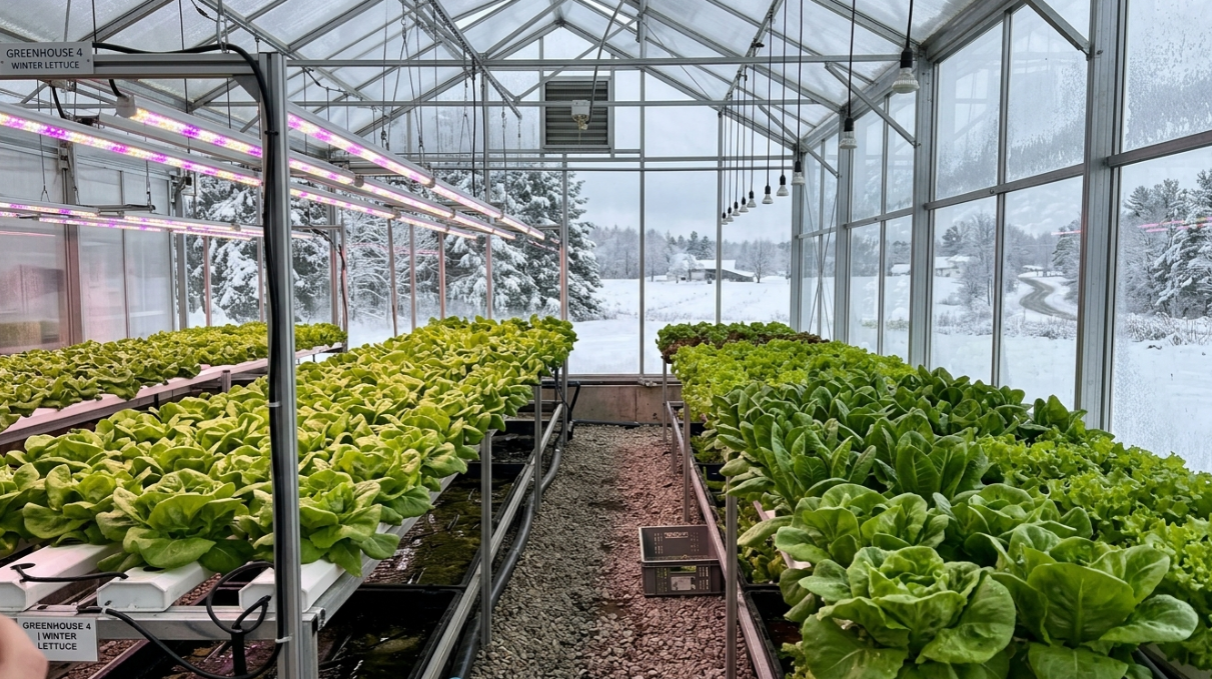
Example 1: Winter Lettuce
Crop target DLI: 14 mol·m⁻²·d⁻¹
Outdoor winter DLI: 10 mol·m⁻²·d⁻¹
Greenhouse transmission: 60%
Inside sunlight DLI: 10 × 0.60 = 6 mol·m⁻²·d⁻¹
Supplemental DLI needed: 14 − 6 = 8 mol·m⁻²·d⁻¹
LED PPFD at canopy: 200 µmol·m⁻²·s⁻¹
Hours: 8 ÷ (200 × 0.0036) = 11.1 hours
This aligns with Virginia Tech’s calculation showing greenhouse lettuce in December needing about 11 hours of supplemental lighting at 200 µmol·m⁻²·s⁻¹ to fill an 8 mol·m⁻²·d⁻¹ deficit. The answer is not “lettuce needs 16 hours of lights.” It is “this greenhouse needs about 11 hours under these specific conditions.”
Example 2: Same Gap, Stronger Fixtures
Supplemental DLI needed: 8 mol·m⁻²·d⁻¹
LED PPFD at canopy: 300 µmol·m⁻²·s⁻¹
Hours: 8 ÷ (300 × 0.0036) = 7.4 hours
Higher PPFD cuts run time, but that does not automatically mean better results. A peer-reviewed lettuce study found that spreading the same DLI across a longer photoperiod at lower PPFD increased dry weight and energy conversion efficiency, although tipburn symptoms also rose with longer photoperiods.
Practitioners on Reddit’s horticulture community have discussed this same tension. Equal DLI is not always equal crop performance when light is delivered at very different intensities and durations.
Example 3: Cannabis Greenhouse
Cannabis greenhouse supplemental lighting hours follow the same DLI math, but photoperiod management adds complexity. A cannabis controls best-practice guide from the Resource Innovation Institute gives DLI targets of 25 to 50 mol·m⁻²·d⁻¹ for flower and bloom, 20 to 40 for vegetative and mother stages, and 15 to 20 for clones and seedlings.
The same guide provides regional benchmarks for greenhouse supplemental hours: flowering crops may need 6 to 8 hours in northern regions and 5 to 6 hours in southern regions. Vegetative stages need 4 to 6 hours in the north and 1 to 3 in the south. Southern clones and seedlings may not need supplemental light at all.
Cannabis growers on Reddit frequently worry about photoperiod transitions. One thread warned that dropping mature plants from an 18/6 indoor schedule to roughly 14 hours of natural light can trigger premature flowering. In cannabis, supplemental lighting hours serve two purposes: filling a DLI gap and maintaining a vegetative photoperiod. Those goals overlap but are not identical. For more on managing cannabis light cycles, see this guide to photoperiod management in cannabis.
PPFD x Hours Reference Table
This table shows the DLI contribution from electric light alone at various fixture intensities and run times. Use it to quickly estimate how many supplemental lighting hours your crop needs.
Fixture PPFD | 4 hrs | 8 hrs | 12 hrs | 16 hrs | 18 hrs |
|---|---|---|---|---|---|
100 µmol·m⁻²·s⁻¹ | 1.4 | 2.9 | 4.3 | 5.8 | 6.5 |
150 | 2.2 | 4.3 | 6.5 | 8.6 | 9.7 |
200 | 2.9 | 5.8 | 8.6 | 11.5 | 13.0 |
250 | 3.6 | 7.2 | 10.8 | 14.4 | 16.2 |
300 | 4.3 | 8.6 | 13.0 | 17.3 | 19.4 |
500 | 7.2 | 14.4 | 21.6 | 28.8 | 32.4 |
Values in mol·m⁻²·d⁻¹, derived from the standard DLI equation (PPFD × hours × 0.0036).
Note that 200 µmol·m⁻²·s⁻¹ for 16 hours delivers about 11.5 mol·m⁻²·d⁻¹ from fixtures alone. That is enough for seedlings and bedding plants but falls short for tomatoes, cucumbers, and cannabis flower.
Commercial operations that need higher PPFD and uniform coverage across the canopy should look at fixtures designed specifically for greenhouse top lighting at the intensities fruiting and flowering crops require.
When Should Greenhouse Supplemental Lights Run?
Timing matters as much as total hours.
Run lights when ambient greenhouse light is low. Vegetable Growers News reports that supplemental lighting has the greatest photosynthetic effect during darkness or low ambient light, while its benefit is essentially zero on sunny days. The publication recommends operating lamps during part of the night, cloudy winter days, and early morning or late afternoon on sunny winter days.
Avoid running at full output during bright midday. Unless the crop still has a DLI deficit or a control system calls for it, midday operation wastes energy.
Respect dark periods. Some crops need uninterrupted darkness. Greenhouse Product News notes that tomatoes, for example, may require an extended dark period, making split-light schedules a poor fit for certain production systems.
Consider electricity pricing, but put biology first. Off-peak operation can reduce cost, but only if the crop tolerates the schedule. Check your utility rate structure and explore available greenhouse lighting rebates to offset operating costs.
Another LinkedIn practitioner made the point that a few sunny spring days can fool growers into overestimating available light. Tracking average DLI over weeks is the only reliable way to keep crops on schedule.
Seven Common Mistakes with Greenhouse Supplemental Lighting Hours
1. Copying a generic 16-hour schedule. A 16-hour run at 200 µmol·m⁻²·s⁻¹ delivers only 11.5 mol·m⁻²·d⁻¹ from fixtures. That falls short for most fruiting crops and high-DLI cannabis flower.
2. Measuring plant light with lux. UNH Extension states that lumens, lux, and foot-candles measure human perception of brightness and are not useful for measuring plant light. Use a PAR or PPFD meter.
3. Ignoring greenhouse transmission loss. Outdoor DLI is not crop-level DLI. UGA warns that greenhouse transmission can range from 35% to 80%. A greenhouse with dirty glazing and aging structure might block more than half the outdoor light.
4. Running lights during sunny midday. Supplemental lighting provides negligible benefit when the sun is already delivering full intensity. Save those kilowatt-hours for when they matter.
5. Confusing photoperiodic lighting with supplemental lighting. Low-intensity night-interruption lighting can control flowering but adds negligible DLI. It does not replace high-intensity supplemental lighting for growth.
6. Ignoring uniformity. A greenhouse builder on Reddit described using lighting calculation software to model fixture count, spacing, hanging height, and intensity across the canopy. Hours only matter if the crop actually receives the intended PPFD. Without proper fixture layout, some plants get too much light while others sit in shadow.
7. Using a fixed timer year-round. Supplemental lighting hours should change with the season. A timer set for January will oversupply light by April in most climates and waste significant energy.
Controls: From Timers to DLI-Based Automation
The sophistication of your lighting controls directly affects how well your greenhouse supplemental lighting hours match actual crop needs.
Good: Fixed timer adjusted seasonally. Simple and cheap, but crude. The timer does not know whether it is sunny or overcast.
Better: PPFD threshold sensor. Lights turn on when ambient light drops below a set point. This helps but can be unreliable when greenhouse transmission changes due to condensation, shading, or seasonal dirt buildup.
Best: DLI-based controls with inside sensors and dimming. An intelligent controller measures sunlight inside the greenhouse, integrates it over the day, and adjusts dimmable fixtures to hit the target DLI without oversupplying light. The Resource Innovation Institute reports that DLI-based greenhouse controls can offer 20% to 40% energy savings compared to fixed schedules.
One practitioner on the Growers Network forum reported a controller with PAR setpoints that saved 83% on power compared to an older HPS system. That is anecdotal, not a guaranteed outcome, but it illustrates how much energy fixed schedules can waste.
For large-scale operations, the controls conversation connects to electrical infrastructure. Moving LED drivers out of the grow space with remote power architecture simplifies wiring, reduces canopy heat, and makes dimming controls more practical across hundreds of fixtures. To understand the full economic picture of lighting upgrades, see this greenhouse energy savings guide.
How Much Do Greenhouse Supplemental Lighting Hours Cost?
Supplemental lighting costs can be estimated with a simple formula:
Daily cost = Fixture wattage × Operating hours × Electricity rate
Example:
Variable | Value |
|---|---|
LED power | 600 W |
Daily operation | 10 hrs |
Electricity rate | $0.15/kWh |
Daily cost | $0.90 |
Monthly cost | $27 |
Large commercial greenhouses operating hundreds of fixtures can spend thousands of dollars each month on supplemental lighting.
Calculating lighting hours correctly reduces unnecessary electricity use while maintaining crop performance.
Light, CO2, and the Bigger Picture
Increasing supplemental lighting hours without considering CO2 is like adding fuel to an engine without enough air. Greenhouse Product News notes that when supplemental lighting increases plant production, CO2 must be sufficiently available because photosynthesis depends on both light and carbon dioxide. This connects lighting hours to a broader environmental strategy involving CO2 supplementation, HVAC, humidity, and ventilation.
A Realistic Note on Winter Economics
One point that most lighting guides skip: supplemental lighting is not always economically rational. Greenhouse Grower cites a researcher warning that if winter sunlight DLI is only 1 to 2 mol·m⁻²·d⁻¹, adding enough supplemental light to reach optimum DLI may be cost-prohibitive. In those cases, growers may accept a lower DLI target and slower growth rather than running fixtures for 14 or more hours daily at high intensity.
The right number of greenhouse supplemental lighting hours is sometimes “fewer than the crop ideally wants” because energy cost, crop value, and market timing all factor into the decision.
Getting Your Lighting Hours Right
Greenhouse supplemental lighting hours are not a number to look up in a chart. They are the output of a calculation that starts with the crop, accounts for location and season, measures what the greenhouse actually transmits, and factors in fixture performance at canopy level.
The growers who get the most from their lighting investment treat hours as a DLI strategy, not a timer setting. They measure, calculate, adjust by season, and use controls that respond to real conditions.
Request a free greenhouse lighting consultation to turn your DLI target into a specific fixture plan, operating schedule, and energy estimate.
Greenhouse Supplemental Lighting Equipment Checklist
Before calculating supplemental lighting hours, make sure you have:
PAR meter
DLI data for your location
Crop DLI targets
Greenhouse transmission estimates
Fixture PPFD measurements
A seasonal lighting schedule
Timer or lighting controller
Electricity rate information
Without these measurements, supplemental lighting calculations become estimates rather than crop-specific decisions.
Frequently Asked Questions
How many hours a day should greenhouse supplemental lights run?
There is no universal answer. The hours depend on the crop’s target DLI, how much natural light reaches the canopy inside the greenhouse, and the PPFD of the fixtures. A winter lettuce greenhouse might need 11 hours. A southern greenhouse growing seedlings in spring might need zero. Use the formula: hours = supplemental DLI needed ÷ (fixture PPFD × 0.0036).
What is the difference between supplemental lighting hours and photoperiod?
Supplemental lighting hours are the time electric fixtures run. Photoperiod is the total light-to-dark cycle the plant perceives, including both sunlight and electric light. A plant might experience a 16-hour photoperiod but only need 8 hours of supplemental lighting if sunlight covers the first 8 hours.
Can I just use a timer for greenhouse supplemental lighting?
A timer works as a starting point, but it does not respond to weather or season. On sunny days a fixed timer wastes electricity, and on overcast days it might not run long enough. DLI-based controls with inside-greenhouse sensors give better results and can reduce energy use by 20% to 40%.
Do greenhouse supplemental lighting hours change by season?
Yes. In the northern half of the U.S., greenhouse DLI can drop below 12 mol·m⁻²·d⁻¹ for about three months of winter. Supplemental lighting hours should be longest during those dark months and shortest (or zero) in summer when natural light meets or exceeds crop DLI targets.
Should greenhouse lights run at night?
Running lights during part of the night can be effective, especially when electricity rates are lower. However, some crops need an uninterrupted dark period. Tomatoes, for example, may not perform well under split light schedules. Always check your crop’s dark-period requirements before scheduling overnight operation.
Is lux a good way to measure greenhouse light for plants?
No. Lux, lumens, and foot-candles measure human perception of brightness. Plants respond to photons in the PAR range (400 to 700 nm), measured as PPFD in µmol·m⁻²·s⁻¹. A PAR meter is the correct tool for measuring plant-usable light.
How does greenhouse structure affect supplemental lighting hours?
Greenhouses block 30% to 65% of outdoor sunlight through glazing, structural steel, hanging baskets, dirt, and condensation. A greenhouse with 50% transmission in a location with 20 mol·m⁻²·d⁻¹ outdoor DLI only delivers 10 mol·m⁻²·d⁻¹ to the crop, increasing the DLI gap and extending the required supplemental lighting hours.
What DLI do cannabis plants need in a greenhouse?
Cannabis DLI targets vary by growth stage. A controls best-practice guide suggests 25 to 50 mol·m⁻²·d⁻¹ for flower and bloom, 20 to 40 for vegetative and mother stages, and 15 to 20 for clones and seedlings. Greenhouse supplemental lighting hours should be calculated from the DLI gap at each stage, with photoperiod management layered on top for flowering control.