Greenhouse LED Maintenance Cost: 2026 Cost-Saving Guide
Greenhouse LED maintenance cost explained: compare LED vs. HPS, uncover driver costs, and follow a practical schedule to cut long-term expenses.
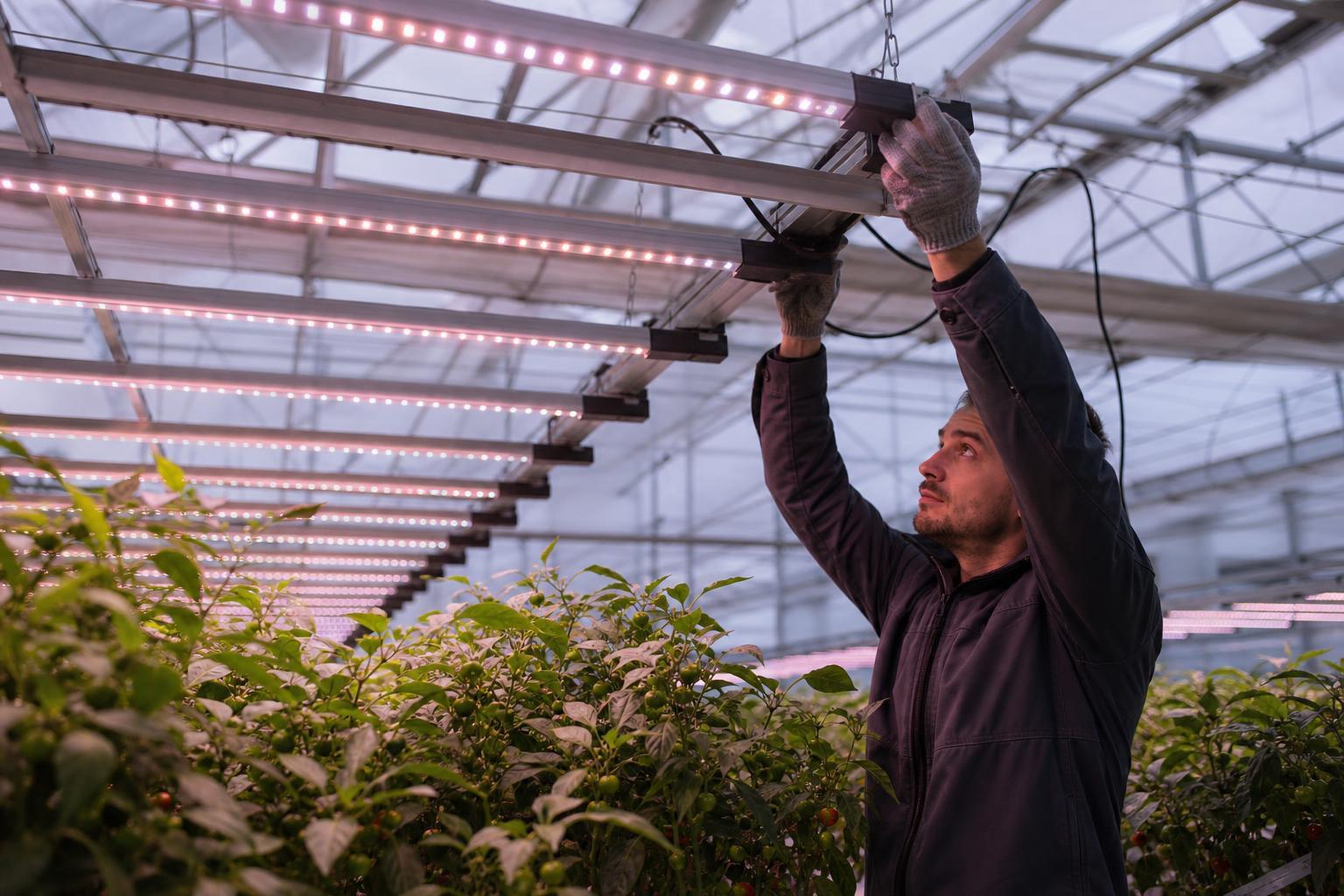
TL;DR: Greenhouse LED maintenance cost is the total recurring expense of keeping LED grow lights performing at their rated output. It covers cleaning, driver replacement, lumen depreciation monitoring, electrical inspections, and heat sink care. While far lower than HPS maintenance (which can exceed $160,000 in bulb costs alone over five years for a large facility), LED maintenance is not zero. The driver is the component most likely to fail, and how you manage it determines your long-term costs.
If you’re budgeting a commercial greenhouse LED lighting project, the purchase price gets all the attention. The ongoing costs that follow rarely get the same scrutiny. That’s a problem, because maintenance expenses accumulate over years, quietly eating into the ROI that justified the investment in the first place.
This guide breaks down exactly what greenhouse LED maintenance cost includes, puts real numbers on each component, and explains the single biggest cost driver most growers overlook.
What “Greenhouse LED Maintenance Cost” Actually Means
Greenhouse LED maintenance cost is the total recurring expenditure required to keep LED grow light fixtures performing at their rated output inside a greenhouse environment. It sits alongside energy costs and HVAC costs as one of three ongoing operating expenses in the total cost of ownership for a lighting system.
It is not the upfront capital cost of buying the fixtures. It is not the monthly electricity bill. It is everything else: the labor, parts, testing, and cleaning that keep the lights working properly after installation.
In commercial greenhouses, this cost matters more than in indoor grows for a specific reason. Greenhouses expose fixtures to condensation, fertilizer residue, pollen, temperature swings, and humidity levels that accelerate wear on electronic components. A maintenance cost estimate built for a climate-controlled indoor facility will undercount what a greenhouse operator actually spends.
The Five Components of Greenhouse LED Maintenance Cost
1. Cleaning (Dust and Debris Removal)
Dirty optics are the simplest and most preventable cause of lost light output. Dust, pollen, and fertilizer residue accumulate on lens surfaces and can reduce PPF output by 10 to 25% over the course of a year. In a greenhouse, where airborne particles are constant, this happens faster than in sealed indoor rooms.
The fix is straightforward: quarterly cleaning with a soft microfiber cloth and a mild electronics-safe cleaner. The cost is almost entirely labor. But the cost of neglect, a 10 to 25% drop in usable light reaching the canopy, translates directly into reduced yields.
2. Driver Monitoring and Replacement
This is the big one. LED drivers, the electronic components that regulate power to the diodes, are responsible for 70 to 80% of all LED fixture field failures. Practitioners on electrical forums confirm this pattern consistently. One electrician on the Mike Holt forum described testing failed fixtures by swapping in new drivers: “As a test, on a few of the replacements, I used the same light but new driver. The old lights all worked with the new driver.”
The LED chips themselves are not what fails. The driver is the bottleneck.
A replacement driver typically costs $15 to $80 for the part. Add $50 to $150 in professional installation labor, and you’re looking at $65 to $230 per event. That sounds manageable for one fixture, but multiply it across a facility with hundreds of lights and the math changes fast. For deeper context on failure patterns, LED reliability data is worth reviewing.
3. Lumen Depreciation Tracking
Every grow light produces less light over time. This is called lamp lumen depreciation (LLD), and for plants, the relevant metric is PPF (photosynthetic photon flux), which degrades the same way.
The industry uses “L” ratings to describe this: L90 means 90% of original output remains, L80 means 80%, and so on. For horticulture, L90 is the standard that matters, because even a 10% PPF loss translates to roughly 10% yield loss. Premium fixtures typically hit L90 between 36,000 and 50,000 hours based on LM-80/TM-21 testing data.
The maintenance task here is annual: use a PAR meter to measure canopy-level PPFD against your commissioning baseline. A 15%+ drop triggers a deeper investigation into driver health or diode degradation. This test takes time but catches problems before they cost you a full harvest cycle.
4. Electrical Connection Inspections
Greenhouse environments stress electrical connections more than indoor facilities. Humidity causes corrosion. Temperature swings loosen terminals. Surge events can damage components that appear fine on visual inspection.
Regular checks of connectors, IP-rated seals, and surge protection devices should be part of any maintenance plan. Understanding greenhouse electrical infrastructure helps operators know what to check and when.
5. Heat Sink and Airflow Maintenance
LED fixtures generate heat at the diode junction, and that heat must be dissipated through heat sinks. If heat sinks are clogged with dust or debris, or if passive airflow paths are blocked, the driver overheats. Overheating dramatically shortens driver life, which circles back to the most expensive maintenance category.
In greenhouses with high humidity, condensation can collect on heat sink fins and attract particulate buildup. A visual inspection and wipe-down during quarterly cleaning prevents this from becoming a problem.
LED vs. HPS: A Maintenance Cost Comparison With Real Numbers
The maintenance cost gap between LED and HPS lighting is not subtle. It is large enough to change the financial outcome of a lighting project.
Cost Element | LED | HPS |
|---|---|---|
Bulb/lamp replacement | None during rated life (50,000+ hours) | $30–$70 per bulb every 8–12 months |
Annual bulb cost (436-fixture facility) | $0 | $32,242 |
5-year bulb cost (same facility) | $0 | $161,211 |
Per-fixture annual operating cost | ~$605 | ~$1,135 (excluding maintenance) |
Annual maintenance savings (10,000 sq ft greenhouse) | $6,500–$7,000 | Baseline (higher) |
These figures come from an audited case study of a 24,050 sq ft cannabis greenhouse in Plymouth, MA, which demonstrated first-year energy savings of $230,000 after converting from HPS to LED. The per-fixture operating cost includes energy but not the maintenance line items, meaning the actual gap is even wider.
One important counterpoint, noted by Bruce Bugbee at Utah State University: when an LED fixture does fail, the unit-replacement cost is higher than swapping an HPS bulb. What makes LEDs win on maintenance is the dramatically lower failure frequency. An HPS bulb needs replacing every 8 to 12 months. A well-maintained LED fixture can run for years before any component needs attention.
For operators weighing a switch, understanding the full LED vs. HPS comparison beyond just maintenance is essential.
Why Drivers Are the Hidden Greenhouse LED Maintenance Cost
Most growers hear “50,000-hour lifespan” and assume the entire fixture will last that long. That number applies to the LED diodes. The driver, which powers those diodes, has a meaningfully shorter life.
LED drivers last five to seven years in typical conditions and will likely need at least one replacement during the fixture’s operating life. The weak link inside the driver is the electrolytic capacitor. Its lifespan is heavily temperature-dependent: at 85°C internal temperature, capacitors typically last 5 to 8 years. At 105°C, that drops to 2 to 3 years. Driver life decreases inverse-exponentially with operating temperature.
There’s also a measurement problem. LED chips are rated with L90 numbers that tell you when output has dropped by 10%. But driver reliability is rated with MTBF (Mean Time Between Failures), which tells you when 50% of drivers will have failed. These are fundamentally different metrics, and comparing them as if they mean the same thing leads to nasty surprises.
In greenhouse environments specifically, the combination of high humidity and temperature swings accelerates driver degradation beyond what indoor specs would predict. In high-bay and commercial applications, replacement costs for an integrated fixture (including labor and equipment access) can run 40 to 75% of the original purchase price.
This is why driver management is the single most impactful area for reducing greenhouse energy and maintenance costs.
How Centralized Power Architecture Cuts Maintenance Cost
The conventional approach puts a driver inside or directly attached to every fixture. In a 500-light greenhouse, that’s 500 drivers hanging above the canopy in a humid, hot environment, each one aging at its own rate, each one a potential point of failure.
Centralized power architecture takes a different approach: relocate drivers outside the grow space entirely. This has several concrete effects on maintenance cost.
Fewer in-room failure points. Centralizing power supplies removes thousands of active electronic components from the greenhouse. These components and their connections are the main causes of LED failure, so removing them reduces the maintenance burden proportionally.
Easier, cheaper servicing. When a driver module does need attention, a technician services it from a utility room or equipment rack. No scaffolding in the greenhouse. No disrupting plants. No disturbing the carefully controlled photoperiod, which is a real concern practitioners raise because unplanned light interruptions can set back flowering crops.
Cooler operating temperatures. Drivers running in a climate-controlled equipment room stay cooler than drivers mounted above a hot canopy. Since driver life is exponentially tied to temperature, even a 10 to 15°C reduction in operating temperature can double capacitor lifespan.
The numbers back this up. Advanced Energy reports that centralized LED lighting drivers deliver up to 35% savings on initial capital costs and approximately 20% annual savings on energy and maintenance. Other analyses show centralized systems can reduce costs associated with electrical, control, and LED systems by up to 40%.
Thrive Agritech’s OptiDrive remote power platform is built around this principle, moving the driver layer outside the grow space so fixtures run lighter, cooler, and with fewer components that can fail in harsh greenhouse conditions.
The HVAC Factor: An Indirect Maintenance Cost
LEDs generate roughly 60% less heat than HPS fixtures for similar usable PAR output, which means less HVAC load in warm conditions. But there’s a trade-off that greenhouse operators need to plan for: in cold climates, LED greenhouses require more supplemental heating than HPS greenhouses, because the waste heat from HPS bulbs was contributing to the heating budget.
Research from Wageningen University estimates net total energy savings from HPS to LED in the range of 10 to 25%, accounting for both lighting and heating needs. The savings are real, but they’re smaller than the lighting-only numbers suggest. For a closer look at how HVAC requirements change with LED adoption, that interaction deserves its own analysis.
Recommended Greenhouse LED Maintenance Schedule
A structured schedule prevents small issues from becoming expensive failures. Here’s what a practical maintenance calendar looks like:
Weekly:
Visual spot-check for dark diodes, flickering, or uneven output
Note any fixtures behaving differently from their neighbors
Monthly:
Power-off inspection of fixture frames, cables, and mounting hardware
Check optical surfaces for visible buildup
Quarterly:
Full lens cleaning with microfiber cloth and electronics-safe cleaner
Heat sink inspection and debris removal
Verify ventilation paths are unobstructed
Annually:
PAR-meter PPFD measurement at canopy level compared to commissioning baseline
Driver health check (voltage, current, temperature readings)
Full electrical inspection of connections, surge protection, and IP-rated seals
Review against manufacturer’s recommended maintenance intervals
At 36,000+ operating hours:
Formal lumen depreciation assessment against L90 threshold
Decision point: continue operating, replace drivers, or plan fixture replacement
Operators who want verification data from the manufacturer’s side can access technical whitepapers covering LM-80 and TM-21 testing standards.
Also worth noting: utility rebate programs can offset a significant portion of upfront capital costs, which changes the payback math on every maintenance dollar saved.
Frequently Asked Questions
Are LED grow lights maintenance-free?
No. The “maintenance-free” claim that appears in some marketing materials is misleading. LED maintenance cost is dramatically lower than HPS maintenance, but it is not zero. Cleaning, driver monitoring, electrical inspections, and lumen depreciation tracking all require time and, occasionally, parts. The difference is frequency and severity: you’re dealing with quarterly cleanings and occasional driver swaps instead of replacing bulbs every 8 to 12 months across your entire facility.
How long do greenhouse LEDs actually last?
The LED chips are rated for 50,000+ hours, but the driver is the lifespan bottleneck at 5 to 7 years. Think of it like a car: the engine might last 200,000 miles, but you’ll replace the alternator before you get there. Planning for at least one driver replacement during a fixture’s life is realistic budgeting.
What is the biggest greenhouse LED maintenance cost?
Driver replacement. It accounts for 70 to 80% of LED fixture field failures and can cost $65 to $230 per event (parts plus labor). In a large greenhouse with hundreds of fixtures, driver failures over the fixture lifespan represent the majority of total maintenance spending.
Does greenhouse LED maintenance cost change by climate?
Yes. Hot, humid climates accelerate driver aging because electrolytic capacitor life is tied exponentially to temperature. Cold climates may reduce driver stress but add supplemental heating costs since LEDs produce less waste heat than HPS. Coastal greenhouses face additional corrosion risk on electrical connections.
How much can I save per year on maintenance by switching from HPS to LED?
For a 10,000 sq ft greenhouse, annual maintenance savings from LED vs. HPS are estimated at $6,500 to $7,000. For larger facilities, the gap widens considerably. A 436-fixture facility saved over $32,000 per year in bulb replacement costs alone by eliminating HPS lamps.
What is L90 and why does it matter for greenhouse growers?
L90 means the fixture still produces 90% of its original light output. For horticulture, this is the threshold that matters because a 10% drop in PPF roughly equals a 10% drop in yield. Premium LED grow lights maintain L90 for 36,000 to 50,000 hours. When a fixture drops below L90, it’s time to evaluate whether the lost production justifies replacement.
Can I submit a warranty claim if my LED fixture fails prematurely?
Yes. Reputable manufacturers offer warranties that cover premature failures. If you’re experiencing unexpected fixture issues, submitting a warranty claim should be your first step before spending on out-of-pocket repairs.
How do I get a maintenance cost estimate specific to my greenhouse?
Every greenhouse is different. Climate zone, crop type, fixture count, and facility age all affect maintenance projections. The best approach is to schedule a consultation with a lighting specialist who can model total cost of ownership for your specific operation.