Centralized LED Drivers in 2026: Benefits, Costs & Code
Centralized LED drivers cut canopy heat, simplify maintenance, and lower install costs by up to 35%. See 2026 specs, code tips, and ROI modeling.
TL;DR
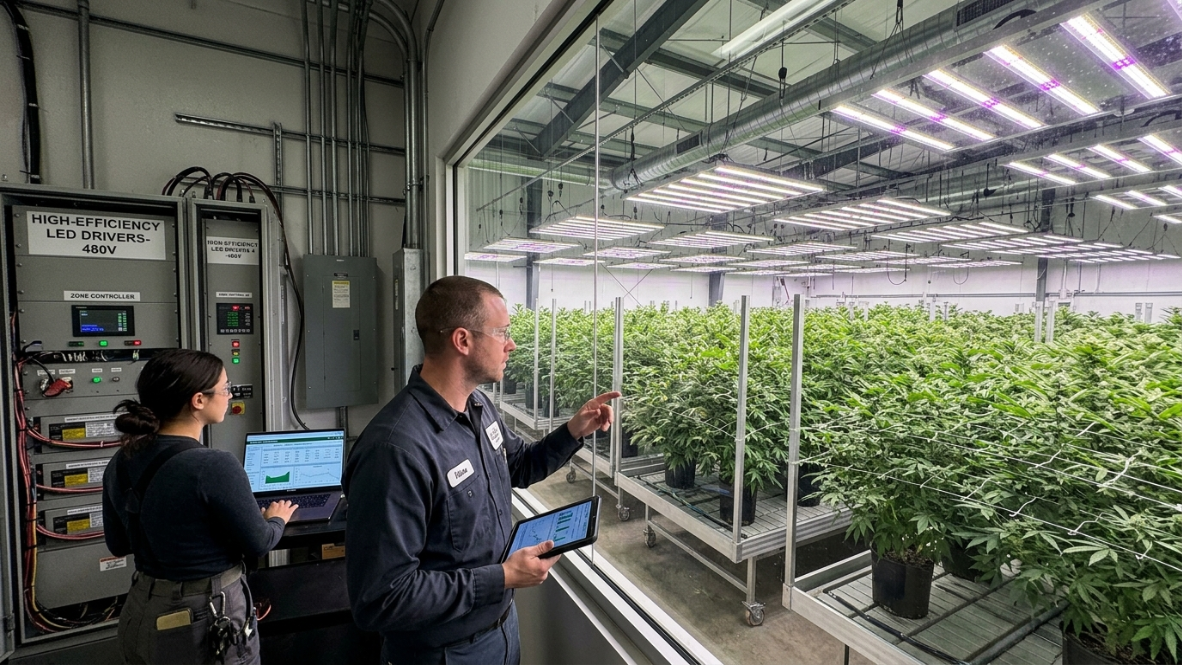
Centralized LED drivers consolidate power conversion into a single rack or cabinet located outside the grow space, replacing the conventional approach of mounting an individual driver on every light fixture. This architecture reduces heat in the canopy zone, extends driver lifespan by keeping electronics cool, cuts capital and installation costs by up to 35%, and simplifies maintenance across large horticultural facilities.
Explore centralized power systems built for commercial grow operations.
Quick Answer
Centralized LED drivers move the power conversion electronics out of individual LED fixtures and into a shared cabinet or rack located outside the grow room. Compared with traditional onboard drivers, centralized systems reduce heat around the canopy, simplify maintenance, improve driver lifespan, and can lower installation costs in large commercial horticulture facilities. They are most beneficial for commercial greenhouses, cannabis cultivation, and vertical farms operating dozens or hundreds of fixtures.
Centralized vs Traditional LED Drivers
| Feature | Centralized Driver | Traditional Driver |
|---|---|---|
| Driver Location | Utility room | Inside every fixture |
| Fixture Weight | Lower | Higher |
| Heat Inside Grow Room | Lower | Higher |
| Maintenance | Centralized | Fixture by fixture |
| Driver Lifespan | Longer | Shorter |
| Installation Complexity | Lower on large projects | Simpler on very small projects |
| Best For | Commercial facilities | Small grows |
| Initial Cost | Lower at scale | Lower for small installs |
| Scalability | Excellent | Moderate |
| IP Rating Requirement | Standard (utility room) | Higher (IP65/IP66 typical) |
What Are Centralized LED Drivers?
Every LED fixture needs a driver. The driver is the component that converts AC mains power (the electricity from the wall) into the regulated DC current that LEDs require. Without a driver, the LEDs burn out almost immediately. The driver is not optional, it is fundamental.
In a conventional lighting setup, each fixture carries its own driver, either built into the housing or mounted nearby. A 500 fixture grow room means 500 individual drivers. Each one generates heat. Each one is a potential failure point. Each one needs its own wiring run back to the electrical panel.
Centralized LED drivers take a different approach. Instead of distributing 500 small power supplies across the canopy, the AC to DC conversion happens in a shared power platform, typically a rack or cabinet installed in a utility room, electrical closet, or mechanical space outside the growing environment. Low voltage or managed DC power then runs from that central location to lightweight, driverless fixtures in the greenhouse or grow room.
The concept is not new in other industries (server rooms and telecom have used centralized power for decades), but its application in horticulture has accelerated over the past several years as facilities have grown larger and the limitations of per fixture drivers have become harder to ignore. For a broader look at how power distribution works in commercial grows, the horticulture lighting power distribution guide covers the fundamentals.
How Centralized LED Drivers Work
The basic architecture has three layers:
The power platform. A rack or cabinet houses multiple driver modules. These modules accept standard AC input (208V to 600V, single or three phase depending on the system) and convert it to regulated DC output. Platforms are modular, so a facility can scale capacity by adding modules. Some systems combine multiple 4 kW modules into a single pre wired cabinet, with total capacity ranging from 3 kW for small zones up to 144 kW or more for large installations.
The distribution network. DC power travels from the central platform to the grow space through cabling. This is where system designs diverge. Some platforms distribute high voltage DC, which is efficient over long cable runs but requires careful safety engineering. Others use low voltage distribution over standard cabling, which simplifies installation and reduces conduit requirements. A newer category, fault managed power systems, runs continuous safety monitoring (up to 500 checks per second) and shuts down circuits instantly when faults are detected.
The driverless fixtures. Without onboard drivers, the fixtures themselves become simpler, lighter, and cooler. They receive DC power and convert it to light. That’s it. No bulky driver housing, no heat generating electronics at the canopy, no electrolytic capacitors baking in a 90°F grow room.
For indoor grow room lighting and cannabis flower rooms, this separation of power conversion from light delivery changes the entire thermal and maintenance equation.
Centralized Power Cabinet Configuration and Sizing
Choosing the right cabinet configuration is one of the more practical decisions in a centralized driver project, and it is frequently undersized or oversized by first time buyers.
Matching Cabinet Capacity to Fixture Load
The sizing process starts with total connected wattage. Count every fixture the cabinet will serve, multiply by the wattage per fixture, and add a margin for future expansion (typically 15% to 20%). A facility running 100 fixtures at 1,000W each needs 100 kW of driver capacity before the expansion buffer.
Most commercial platforms use modular architectures. A single cabinet might accept six to twelve driver modules, each rated at 3 kW to 4 kW, letting operators build capacity incrementally rather than buying everything upfront. This modularity also provides redundancy: if one module fails, the remaining modules continue powering the rest of the system while the faulty unit gets hot swapped.
Physical Space and Ventilation
Cabinet placement matters more than most people realize. The utility room or electrical closet needs adequate floor space, ceiling clearance for cable management, and enough airflow to dissipate the heat the drivers produce. A 100 kW system operating at 95% efficiency still generates roughly 5 kW of waste heat inside that room. Without proper ventilation or supplemental cooling, the very thermal problem that centralized drivers solve in the grow room simply relocates to the electrical room.
Input Power Considerations
Facilities with three phase 480V or 600V service can typically run longer cable distances with less voltage drop than those limited to single phase 208V or 240V. The cabinet’s input voltage range should match what is available at the site. Upgrading electrical service to accommodate a centralized platform adds cost that belongs in the project budget from day one.
For detailed specs on specific platforms, technical datasheets provide the numbers needed for engineering comparisons.
Why the Industry Is Moving to Centralized Drivers
The shift toward centralized LED driver architecture is not a marketing trend. It is driven by a well documented engineering problem: drivers fail before LEDs do, and grow room conditions make it worse.
The Driver Is the Weak Link
Most commercial LED fixtures use L90 rated diodes that maintain at least 90% of their initial light output after 50,000 hours. The LEDs themselves are remarkably durable. The driver is a different story.
The component most likely to fail inside an LED driver is the aluminum electrolytic capacitor. These capacitors have a finite service life defined by electrolyte evaporation, and that evaporation rate is an exponential function of temperature. Industry data shows that electrolytic capacitor lifetimes are often less than 25,000 hours, while the LED itself can last 50,000 to 100,000 hours. The driver dies long before the diode. For more on what drives fixture failures, the LED reliability guide breaks down the specifics.
The 10 Degree Rule
The relationship between temperature and capacitor lifespan follows the Arrhenius equation, which produces a simple and memorable rule: for every 10°C increase in operating temperature, the capacitor’s expected life halves. The reverse is also true. Every 10°C decrease doubles lifespan.
This matters enormously in horticulture because of a detail most people overlook. The air temperature in a grow room is not the temperature the capacitor experiences. The capacitor sits inside a sealed driver enclosure alongside other circuitry that generates heat, typically around 10% of the total power supplied to the fixture. A 1,000W fixture creates roughly 100 watts of continuous heat inside its driver housing. The capacitor might be operating at 80°C or higher even when the room itself is only 78°F.
Here is what the math looks like when you move drivers out of the grow space:
| Driver Location | Approx. Internal Temp | Estimated Capacitor Life |
|---|---|---|
| Inside fixture housing (grow room) | 80°C | ~12,500 hours |
| Inside fixture housing (warm greenhouse) | 70°C | ~25,000 hours |
| Utility room (climate controlled) | 40°C | ~100,000 hours |
| Air conditioned electrical room | 25°C | ~200,000 hours |
Moving drivers from an 80°C fixture enclosure to a 25°C electrical room can multiply driver lifespan by 8x or more. That is the core engineering case for centralized LED drivers.
Heat Compounds in Grow Rooms
The problem feeds itself. Drivers generate heat inside the grow space. That heat raises the ambient temperature. The HVAC system works harder to compensate. Meanwhile, the higher ambient temperature makes the drivers run even hotter, shortening their lifespan further. In facilities with hundreds of fixtures, this thermal compounding effect is significant. The relationship between lighting heat load and cooling requirements is covered in more detail in the HVAC sizing guide for LED lights.
Ingress Protection: Why Centralized Drivers Reduce IP Requirements
One benefit that rarely gets headline attention is the reduction in ingress protection (IP) ratings required for driverless fixtures.
Traditional LED fixtures used in greenhouses and indoor grows typically need IP65 or IP66 ratings because the driver electronics are exposed to the same humid, dusty, and sometimes chemically aggressive environment as the plants. Achieving those ratings requires sealed enclosures, gaskets, specialized connectors, and rigorous testing. All of that adds cost to every single fixture.
When the driver moves to a utility room, the fixture no longer houses sensitive power conversion electronics. The remaining components (LED boards, heat sinks, optics) are inherently more tolerant of moisture and particulates than capacitors and transistors. This means driverless fixtures can often meet application requirements with lower IP ratings, sometimes IP54 or even IP20 for fully indoor vertical farm installations.
The practical result is cheaper fixtures, simpler designs, and fewer warranty claims related to moisture ingress. Practitioners on Reddit’s controlled environment agriculture forums have noted that IP rated enclosures are one of the hidden cost drivers in traditional fixture design, and that removing the driver from the wet zone is “the obvious fix that took the industry too long to adopt.”
For greenhouse applications specifically, where condensation and overhead irrigation create persistent moisture exposure, the reduction in IP requirements translates directly to lower fixture replacement rates over a 5 to 10 year operating horizon.
Environmental Stability in Controlled Environment Agriculture
Centralized LED drivers do more than reduce heat. They improve the overall stability of the controlled environment, which directly affects crop consistency.
Temperature Uniformity
Every onboard driver acts as a localized heat source above the canopy. In a room with 200 fixtures, that creates 200 heat points distributed across the ceiling plane, each one subtly warming the air and canopy below it. The resulting temperature gradients are small individually but collectively create uneven conditions that show up in crop variability.
Removing those heat sources flattens the thermal profile of the grow space. Environmental controllers can maintain tighter setpoints when they are not fighting against distributed heat loads that shift with dimming schedules and photoperiod changes. One vertical farm operator shared in a YouTube walkthrough that after switching to centralized drivers, their leaf surface temperature variance dropped from ±3°F to ±1°F across a 40 foot tier, which they credited with reducing tip burn in lettuce by roughly half.
Humidity and VPD Control
Driver heat also affects humidity dynamics. Warm air holds more moisture, so localized hot spots near fixtures create micro zones with different vapor pressure deficit (VPD) values than the rest of the room. This is particularly problematic in cannabis flower rooms, where tight VPD control directly affects trichome development and mold risk.
By eliminating driver heat from the canopy zone, centralized systems give HVAC and dehumidification equipment a more uniform environment to manage. The result is more predictable transpiration rates and more consistent crop outcomes across the entire grow space.
Centralized LED Drivers vs Remote Drivers: Are They the Same?
Many growers encounter both centralized LED drivers and remote LED drivers when researching commercial lighting systems. Although the terms are often used interchangeably, they are not always identical.
A remote driver simply means the driver is mounted away from the fixture. It may still power only one light. The remote driver LED grow lights guide covers this distinction in detail.
A centralized driver system combines multiple driver modules into a single cabinet that powers many fixtures simultaneously.
| Term | Description |
|---|---|
| Onboard Driver | Driver mounted inside the fixture |
| Remote Driver | Driver mounted outside the fixture |
| Centralized Driver | Multiple drivers consolidated into one cabinet serving many fixtures |
Understanding this distinction helps buyers compare products from different manufacturers, as marketing terminology is not always consistent.
Benefits for Commercial Growers
Lower Capital Costs
Customer data from centralized driver manufacturers shows savings on initial capital costs of up to 35% compared with systems using individual LED drivers. The savings come from several places: fewer wiring runs, less conduit, simpler electrical panels, and reduced fixture hardware costs since driverless fixtures are cheaper to manufacture.
Some vendors report that centralized systems reduce installation costs by 10 to 15 percent simply by eliminating dimming wires from each fixture. Others claim install time and labor reductions of up to 80% through chainable fixture designs that eliminate overhead wiring. For a deeper breakdown of what drives installation budgets, the greenhouse lighting installation cost guide walks through the full picture.
Reduced HVAC Load
Removing driver heat from the grow space directly reduces the cooling burden. One manufacturer claims a roughly 20% reduction in grow room temperature, allowing operators to install smaller HVAC systems or downsize existing equipment.
However, it is worth noting a counterpoint that practitioners have raised: some growers overestimate the direct energy and HVAC cost savings from centralized drivers. The heat generated by the drivers does not disappear, it moves to the electrical room, which may need its own cooling. The net HVAC benefit is real but depends on the facility layout and climate zone. Honest modeling matters more than vendor claims here.
Simplified Maintenance
When a driver fails in a conventional system, someone has to identify which of hundreds of fixtures went down, access it at canopy height, and replace the driver or the entire fixture. With centralized LED drivers, servicing happens in the utility room. Modules can often be hot swapped without shutting down the rest of the system. No ladder, no canopy disruption, no crop disturbance.
Annual operational costs drop as a result. Customer data suggests approximately 20% savings on energy and maintenance combined. For a facility like Strawberry Fields, which outfitted two acres of greenhouse with LED grow lights, that kind of ongoing savings changes the ROI calculation meaningfully.
Biosecurity and Wash Down Compliance
This angle gets almost no attention in most discussions of centralized power, but growers care about it deeply. Drivers are not washable. When mounted inside the grow space, they accumulate dust, organic material, and moisture. They become potential vectors for mold, pests, and pathogens, particularly in humid cannabis flower rooms or propagation areas.
Removing drivers from the grow space makes true room sanitation possible. Driverless fixtures with lower IP requirements can be designed with smooth, sealed surfaces that tolerate wash down procedures, fogging, and chemical sanitization far better than traditional fixtures packed with sensitive electronics.
For operations pursuing GMP compliance or maintaining strict biosecurity protocols, this alone can justify the architectural change. Cannabis cultivators in particular have noted on industry forums that the ability to fully sanitize a flower room between cycles, without worrying about moisture damage to 200 individual driver enclosures, is a significant operational win. In states with increasingly strict testing and contamination standards, having fewer harboring surfaces in the grow room reduces both compliance risk and remediation costs.
Greenhouse Structural Benefits
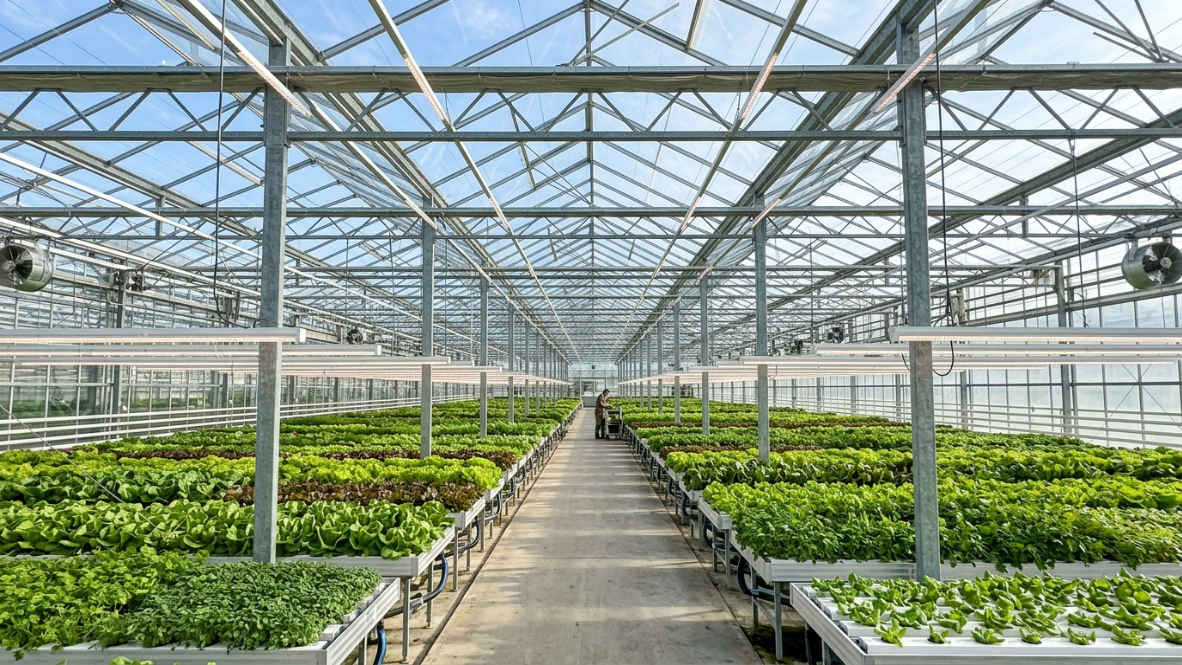
For greenhouse supplemental lighting installations, centralized drivers solve two physical problems. First, lighter fixtures mean less weight hanging from greenhouse structures, which reduces the amount of steel required in the framing. Second, smaller fixtures cast less shadow, improving the natural light that is the whole point of growing in a greenhouse.
Zone Dimming and Centralized Control
Per fixture dimming requires dimming wires running to each light, multiplying wiring complexity. Centralized LED driver systems can control multiple zones from a single interface, with protocol support for 0 to 10V analog or MODBUS digital communication. Some platforms support up to six independently dimmable zones per enclosure.
This simplification is especially relevant for vertical farm LED systems, where multi tier layouts make per fixture wiring impractical at scale.
Compatibility with Lighting Controllers and PLCs
A centralized driver platform is only as useful as its ability to integrate with the rest of the facility’s automation stack. This is where many first time buyers get caught off guard.
Protocol Support
The two most common control protocols in commercial horticulture are 0 to 10V analog and MODBUS (typically RS485 or TCP/IP). Most centralized driver platforms support one or both, but the details matter.
0 to 10V is simple, widely supported, and easy to wire, but it only provides dimming control. There is no feedback from the driver to the controller, so the system cannot report faults, power consumption, or operating status back to the automation layer.
MODBUS provides bidirectional communication. The controller can set output levels and read back actual power draw, temperature, fault codes, and operating hours. For facilities that track energy use per zone or need automated alerts when a module degrades, MODBUS integration is worth the additional wiring and configuration effort.
PLC and Environmental Controller Integration
Larger commercial greenhouses and cannabis facilities typically run programmable logic controllers (PLCs) or dedicated environmental control systems (Argus, Priva, Hoogendoorn, or similar platforms). The centralized driver platform needs to accept commands from these systems, either directly through hardwired analog signals or through a network protocol.
Practitioners on LinkedIn have shared that one of the most common integration mistakes is assuming the lighting controller and the environmental controller will communicate without a gateway or protocol converter. Verifying signal compatibility during the design phase, not during commissioning, saves weeks of troubleshooting.
Sunrise/Sunset Ramping and Scheduling
Most centralized platforms support programmable dimming schedules, including gradual ramp up and ramp down sequences that mimic natural sunrise and sunset. This feature reduces plant stress, avoids the sudden thermal shock of full power startup, and can extend fixture life by reducing inrush current events. Platforms with MODBUS control can receive these schedules from the master environmental controller, keeping lighting synchronized with temperature, CO2, and irrigation programs.
Cost and ROI Analysis
The economics of centralized LED drivers look different depending on whether you focus on the initial purchase order or the total cost of ownership over five to ten years.
Upfront Costs
The power platform itself (cabinet, modules, wiring infrastructure) represents an additional line item that does not exist in a traditional per fixture system. For small facilities, this fixed cost makes centralized architectures more expensive per fixture.
The breakeven point varies by manufacturer and system design, but most industry data puts it somewhere between 50 and 100 fixtures. Above that threshold, the per fixture cost of the centralized system drops below the per fixture cost of individual drivers because of savings on wiring, conduit, junction boxes, and electrical labor.
Installation Labor
This is where centralized systems show the sharpest cost advantage at scale. A traditional 200 fixture install requires 200 individual high voltage AC wiring runs, each with its own circuit protection. A centralized system requires one set of AC connections to the cabinet and then low voltage or DC distribution to the fixtures, which can often be daisy chained without conduit.
Published data from multiple manufacturers suggests installation labor reductions of 40% to 80% depending on the system type and facility layout. The low voltage distribution approach tends to produce the largest install savings because it eliminates conduit requirements entirely in many jurisdictions.
Maintenance and Replacement Costs
Over a 10 year operating window, driver replacement is one of the largest hidden costs in a traditional lighting system. At 80°C internal temperatures, electrolytic capacitors may fail in under two years of continuous operation (roughly 12,500 hours at 18 hour days). Replacing 10% to 20% of the drivers annually across a 500 fixture facility adds up quickly, both in parts cost and in labor to access, diagnose, and swap units at canopy height.
Centralized drivers operating at 25°C to 40°C can last the full economic life of the lighting system (10+ years), potentially eliminating driver replacement costs entirely. When a module does eventually degrade, it is swapped in a utility room in minutes rather than hours.
HVAC Savings
Removing driver heat from the grow space reduces cooling load by roughly the wattage of heat that the drivers were generating. For a 500 kW lighting installation where drivers are approximately 5% to 10% inefficient, that represents 25 kW to 50 kW of heat removed from the grow room. At typical commercial electricity rates and coefficient of performance values for HVAC systems, the annual cooling cost savings can range from $5,000 to $20,000+ depending on climate zone and operating hours.
The greenhouse energy savings guide provides a framework for modeling these numbers against specific facility conditions.
Sample ROI Timeline
| Cost Category | Traditional (500 fixtures, 10 yr) | Centralized (500 fixtures, 10 yr) |
|---|---|---|
| Fixture + driver hardware | Higher per unit | Lower per unit (driverless) |
| Power platform | None | $15K to $40K (varies by capacity) |
| Installation labor | Higher (individual AC runs) | 40% to 80% lower |
| Driver replacements (10 yr) | 1 to 3 full replacement cycles | Near zero |
| HVAC operating cost | Higher | Lower |
| Maintenance labor | Ongoing, distributed | Minimal, centralized |
For most facilities above the 100 fixture threshold, the total cost of ownership over ten years favors centralized architecture by 20% to 35%, with payback on the additional platform cost occurring within 18 to 36 months.
For help modeling ROI on a specific project, the greenhouse lighting payback guide walks through the calculation methodology.
When Centralized LED Drivers Make the Most Sense
Centralized systems provide the greatest return when:
- Facilities operate more than 50 to 100 fixtures.
- Maintenance access is difficult.
- HVAC costs are significant.
- Facilities require GMP or strict sanitation protocols.
- Greenhouses want lighter fixtures with less structural load.
- Vertical farms need simplified wiring across multiple tiers.
- Wash down or chemical sanitization is part of the standard operating procedure.
- Future expansion is planned.
Smaller hobby growers or facilities with only a handful of fixtures generally see fewer financial benefits because installation and maintenance savings are limited.
Considerations and Tradeoffs
Centralized LED drivers are not the right fit for every project. Here are the honest tradeoffs.
Facility Size Matters
A 20 fixture hobby greenhouse will not see meaningful savings from centralizing drivers. The economics tip in favor of centralized architecture when a facility reaches the scale where wiring, maintenance, and HVAC costs compound, typically somewhere above 50 to 100 fixtures. New construction benefits more than retrofits, though low voltage distribution systems have narrowed the retrofit gap.
DC Distribution Safety and Standards
Distributing DC power from a centralized location to fixtures across a large facility raises legitimate safety questions. High voltage DC can be dangerous. Cable sizing, fault protection, and connector quality all matter. This is a real engineering challenge, not a marketing footnote.
Some systems address this through low voltage distribution that eliminates the need for conduit and allows standard cabling. Others use fault managed power systems with continuous monitoring and instant shutdown capability. The approach should match the facility’s electrical infrastructure and local code requirements.
NEC Code Compliance
The 2023 National Electrical Code introduced Section 410.184, which mandates GFCI protection for horticultural lighting using flexible cords. Despite a common misconception, NEC Article 547 does not exempt greenhouses from these requirements.
This creates a practical problem: sourcing GFCIs rated for 277VAC is often difficult and expensive. Many growers end up adding transformers to step down to 208VAC or 240VAC, increasing cost and reducing distribution efficiency.
Centralized LED driver architecture can simplify GFCI compliance by consolidating code relevant connections in a controlled electrical room rather than at hundreds of individual fixtures. The 2023 NEC also introduced Article 726, covering Class 4 fault managed power systems that allow higher power levels with continuous safety monitoring.
Understanding code requirements early in the design process prevents costly surprises. For projects where rebate eligibility is also a factor, DLC listed grow lights can help offset capital costs.
Retrofit vs. New Build
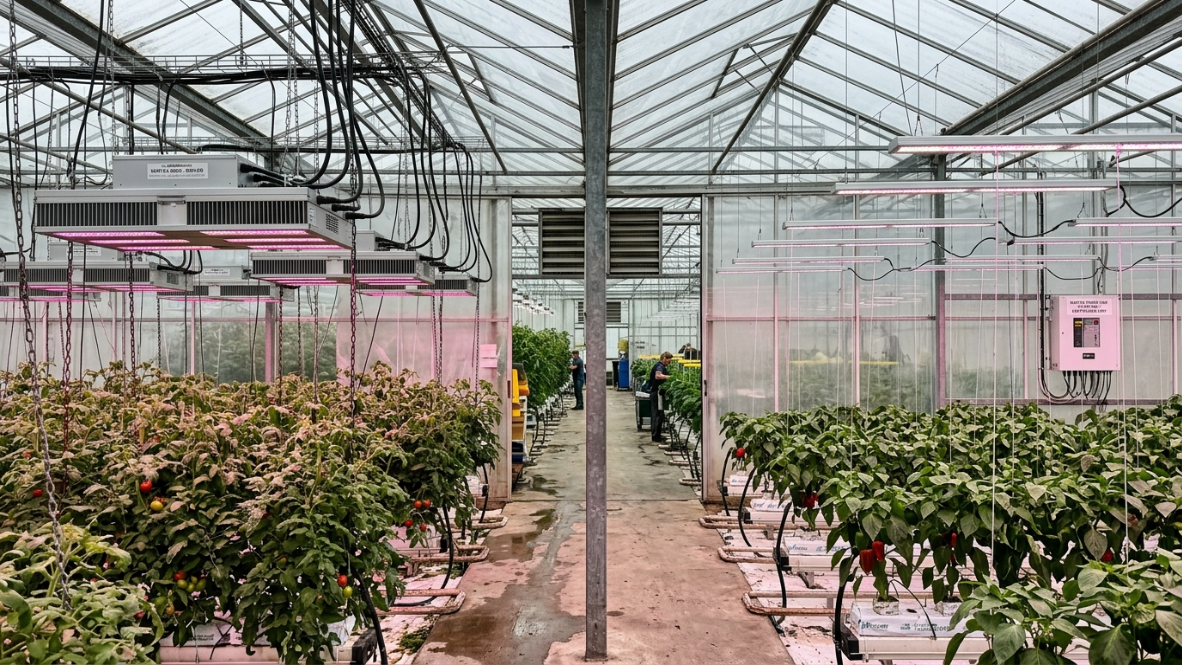
New construction is the easiest path for centralized driver systems because the electrical design can accommodate the architecture from the start. Retrofits are possible but require evaluating existing wiring infrastructure, panel capacity, and available space for the central power platform. Low voltage systems tend to be more retrofit friendly because they can use existing cable pathways.
Schedule a consultation to discuss whether centralized power makes sense for your facility.
Is a Centralized Driver System Worth the Investment?
The answer depends on facility size and operating priorities.
Centralized drivers typically cost more to engineer initially but often reduce ownership costs over the life of the lighting system through:
- Fewer driver replacements
- Reduced maintenance labor
- Simpler troubleshooting
- Lower fixture weight and reduced IP requirements
- Reduced canopy heat
- Easier electrical expansion
- Better wash down and biosecurity compliance
Facilities planning to operate continuously for many years generally recover the additional engineering investment faster than temporary or small scale installations.
Key Specifications to Evaluate
When comparing centralized LED driver platforms, these are the specifications that matter most:
| Specification | What to Look For | Why It Matters |
|---|---|---|
| Efficiency | 94% or higher | Every percent lost becomes heat the facility must manage |
| Input voltage range | 208V to 600V AC, single and three phase | Matches the facility’s existing electrical service |
| Output capacity | kW per module and per cabinet | Determines how many fixtures a single platform supports |
| Dimming protocols | 0 to 10V, MODBUS, or both | Must integrate with the facility’s environmental controls |
| Operating temperature range | At minimum, negative 4°F to 104°F | Utility rooms and rooftop enclosures can see temperature extremes |
| Safety certifications | UL, CSA, CE, GFCI compliance | Non negotiable for insurance and code compliance |
| Modularity | Hot swappable modules | Enables maintenance without full system shutdown |
| IP rating (fixtures) | Application dependent (IP20 to IP65) | Lower ratings possible when driver electronics are removed |
Market Context
The global LED drivers and power supplies market for horticulture is projected to reach USD 7.38 billion by 2035, growing at a CAGR of 10.25%. The high power segment (above 600W) is expected to grow fastest, driven by large scale facilities that increasingly favor centralized power delivery architectures.
Related Terms
Remote LED drivers. Functionally synonymous with centralized LED drivers. “Remote” emphasizes the physical separation between driver and fixture; “centralized” emphasizes the consolidation of multiple drivers into one platform.
Driverless grow lights. Fixtures designed to operate without onboard drivers. They receive DC power from an external source and contain only the LED arrays and associated optics. Lighter, cooler, and simpler than conventional fixtures.
Fault managed power systems (FMPS). A category defined by NEC Article 726 (2023). These systems distribute power at higher levels while continuously monitoring for faults and shutting down circuits within milliseconds when problems are detected. Some centralized driver platforms use FMPS as their distribution method.
Constant current vs. constant voltage drivers. Two approaches to LED power regulation. Constant current drivers (the standard for horticultural LEDs) maintain a fixed current regardless of voltage fluctuations. Constant voltage drivers maintain a fixed voltage and are more common in decorative or signage applications. Centralized platforms for horticulture almost always use constant current regulation.
Under canopy lighting. A complementary strategy where smaller fixtures are placed below the main canopy to improve light penetration to lower leaves and flower sites. Under canopy lighting benefits from centralized power because the fixtures can be made smaller and lighter when they carry no onboard driver, making them easier to position in tight spaces between plants. The under canopy LED lighting guide covers this strategy in detail.
Common Mistakes When Choosing a Centralized Driver System
Avoid these common purchasing mistakes:
Choosing Based Only on Fixture Price
The lighting fixture is only one part of the total system cost. Installation labor, maintenance, replacement parts, and HVAC expenses often exceed the fixture price over time.
Ignoring Driver Room Cooling
Moving heat out of the grow space does not eliminate it. Ensure the electrical room has adequate ventilation or cooling.
Underestimating Future Expansion
Choose modular driver cabinets that allow additional driver modules to be installed without replacing the entire system.
Forgetting Control Compatibility
Verify that the driver platform supports your environmental control system, including protocols such as 0 to 10V, MODBUS, or other automation standards used by your facility.
Overlooking Wash Down Requirements
If the facility requires regular sanitation, confirm that the driverless fixtures are rated for the cleaning methods used (spray, foam, fogging). Centralized architecture makes wash down compliance easier, but fixture material and sealing still need to match the sanitation protocol.
Frequently Asked Questions
What is the difference between centralized and conventional LED drivers?
Conventional systems mount an individual driver on or near each light fixture. Centralized LED drivers consolidate the power conversion into a shared platform in a utility or electrical room, sending DC power to driverless fixtures in the grow space. The difference affects heat management, maintenance access, installation complexity, and long term reliability.
How much can centralized LED drivers save on installation costs?
Published customer data from major manufacturers indicates capital cost savings of up to 35% compared to per fixture driver systems. Installation labor reductions of 10% to 80% have been reported depending on the system, with the widest savings coming from platforms that support chainable, conduit free fixture wiring.
Do centralized drivers actually reduce HVAC costs?
Yes, but the savings depend on the facility. Moving drivers out of the grow space removes a heat source from the growing environment, and some operators report room temperature reductions of roughly 20%. The heat still needs to be managed in the electrical room, so the net benefit depends on facility layout, climate, and HVAC design. Honest energy modeling before purchase is more reliable than vendor claims alone.
Are centralized LED drivers required by code?
No electrical code requires centralized drivers specifically. However, the 2023 NEC Section 410.184 mandates GFCI protection for horticultural lighting using flexible cords, and compliance is often easier and cheaper to achieve with a centralized architecture than with hundreds of individual fixture connections.
What types of facilities benefit most from centralized LED drivers?
Large commercial operations, roughly 50 fixtures or more, see the strongest returns. Cannabis flower rooms, commercial greenhouses, and multi tier vertical farms all benefit. New construction projects benefit more easily than retrofits, though low voltage distribution systems have made retrofits increasingly practical.
How long do centralized LED drivers last compared to conventional drivers?
A driver operating at 80°C inside a fixture housing might last 12,500 hours. The same driver relocated to a 25°C electrical room could last 200,000 hours. The improvement follows the Arrhenius equation: every 10°C temperature reduction doubles capacitor lifespan.
Can I use centralized drivers with my existing fixtures?
Not typically. Centralized LED driver systems require fixtures designed to receive DC power without an onboard driver. Most manufacturers offer matched systems where the power platform and driverless fixtures are engineered to work together. Retrofitting existing fixtures with onboard drivers to work with a centralized platform is generally not feasible.
What should I look for when evaluating centralized driver platforms?
Focus on efficiency (94% or higher), input voltage compatibility with your facility’s service, output capacity per module, dimming protocol support (0 to 10V or MODBUS), operating temperature range, and safety certifications including UL, CSA, and GFCI compliance. Modularity matters too, as hot swappable modules prevent full system downtime during maintenance.
Do centralized drivers improve biosecurity?
Yes. Removing driver electronics from the grow room eliminates surfaces that trap dust, organic debris, and moisture. Driverless fixtures can be designed with smooth, sealed housings that tolerate wash down, fogging, and chemical sanitization. This reduces contamination risk and makes it easier to meet GMP or state level compliance standards.
How do centralized drivers integrate with environmental controllers?
Most platforms support 0 to 10V analog dimming, MODBUS RS485, or both. For full integration with PLCs or dedicated environmental controllers (Argus, Priva, Hoogendoorn), verify signal compatibility and whether a protocol converter or gateway is needed. MODBUS provides bidirectional communication, allowing the controller to read power consumption and fault data in addition to setting output levels.
Final Takeaway
Centralized LED drivers are changing how commercial horticultural lighting systems are designed. By relocating power conversion away from individual fixtures, growers can reduce canopy heat, simplify maintenance, improve driver longevity, lower IP requirements, enhance biosecurity, and create a more scalable electrical infrastructure. While centralized systems are not necessary for every facility, they offer significant operational advantages for large commercial greenhouses, cannabis cultivation sites, and vertical farms where reliability, efficiency, and long term operating costs matter more than the initial purchase price.
Ready to evaluate centralized power for your next project? Get in touch with a lighting specialist for a free consultation.